Introduction
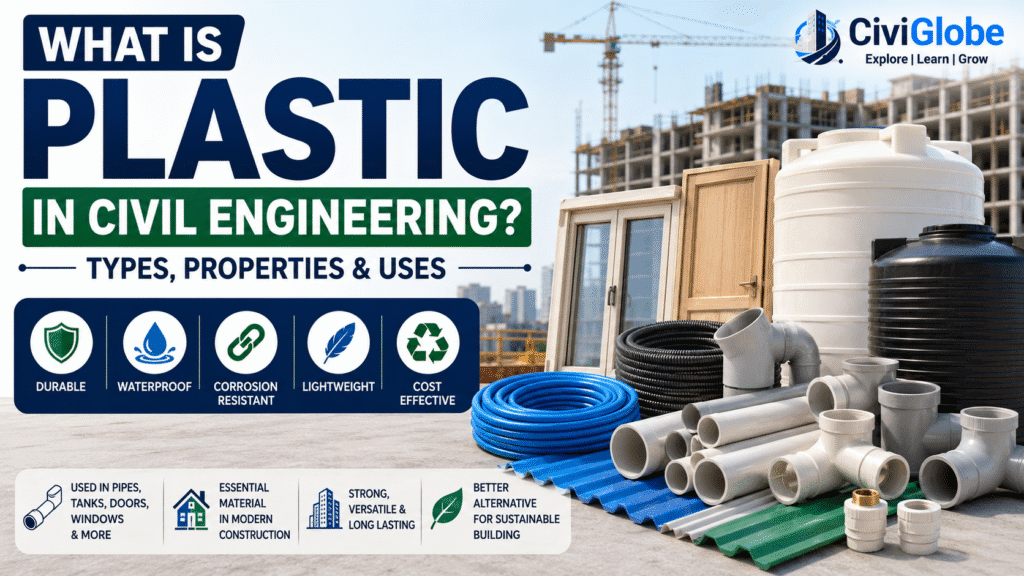
Plastic is one of the most widely used synthetic materials in modern construction and civil engineering. Due to its lightweight nature, durability, corrosion resistance, and versatility, plastic is extensively used in pipes, tanks, doors, windows, insulation, waterproofing, and many other applications. It has become an essential material in residential, commercial, and industrial construction.
What is Plastic?
Plastic is a synthetic or semi-synthetic material made from polymers that can be molded into various shapes and sizes. It is lightweight, durable, waterproof, and resistant to corrosion, making it suitable for numerous construction applications.
Types of Plastic
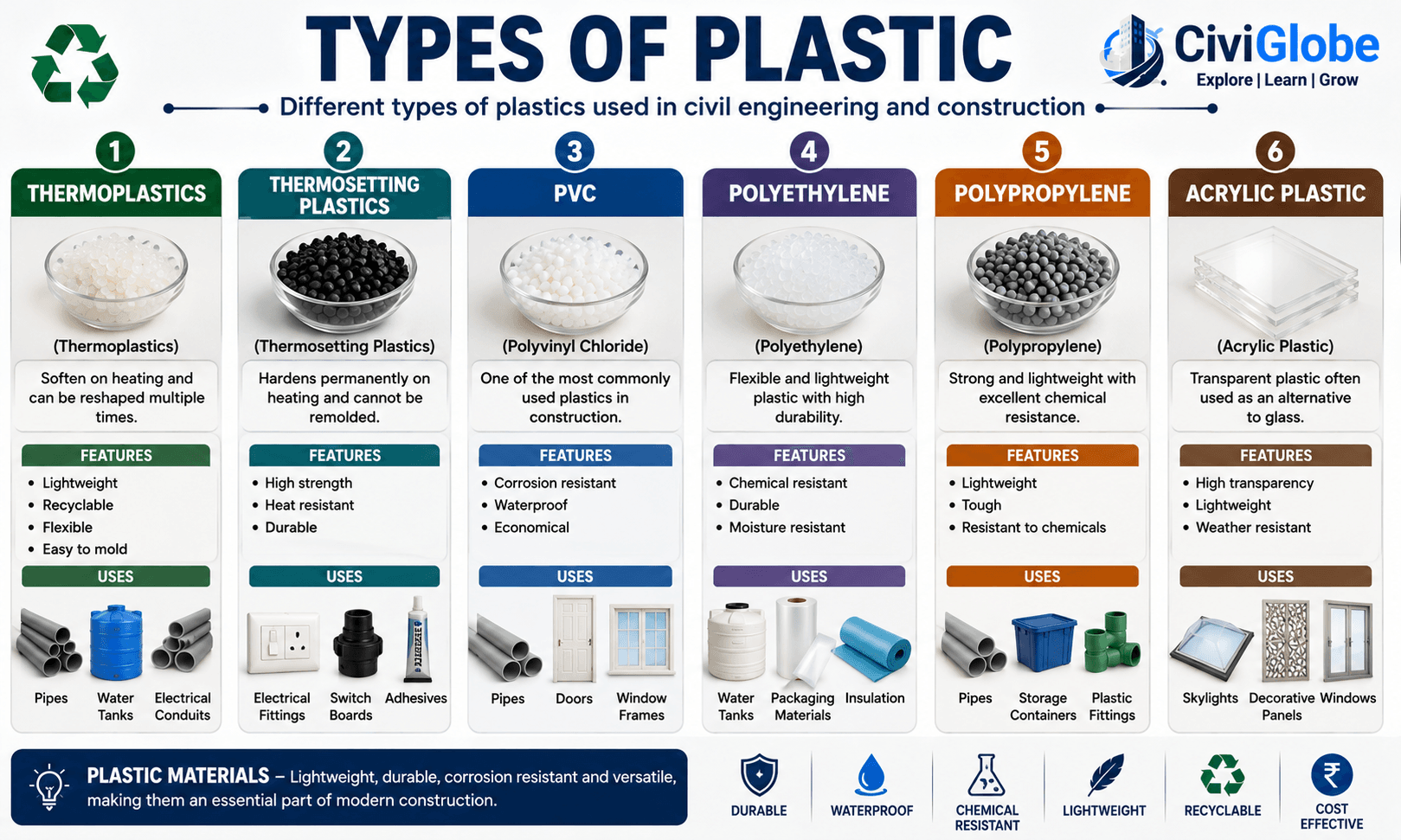
1. Thermoplastics
Thermoplastics soften when heated and can be reshaped multiple times.
Features:
- Lightweight
- Recyclable
- Flexible
- Easy to mold
Uses:
- Pipes
- Water tanks
- Electrical conduits
2. Thermosetting Plastics
These plastics become hard permanently after heating and cannot be remolded.
Features:
- High strength
- Heat resistant
- Durable
Uses:
- Electrical fittings
- Switchboards
- Adhesives
3. Polyvinyl Chloride (PVC)
PVC is one of the most commonly used plastics in construction.
Features:
- Corrosion resistant
- Waterproof
- Economical
Uses:
- Pipes
- Doors
- Window frames
4. Polyethylene (PE)
Polyethylene is a flexible and lightweight plastic.
Features:
- Chemical resistant
- Durable
- Moisture resistant
Uses:
- Water tanks
- Packaging materials
- Insulation
5. Polypropylene (PP)
Polypropylene has excellent chemical resistance and strength.
Features:
- Lightweight
- Tough
- Resistant to chemicals
Uses:
- Pipes
- Storage containers
- Plastic fittings
6. Acrylic Plastic
Acrylic is a transparent plastic often used as an alternative to glass.
Features:
- High transparency
- Lightweight
- Weather resistant
Uses:
- Skylights
- Decorative panels
- Windows
Properties of Plastic
A good plastic should possess the following properties:
- Lightweight
- Durable
- Waterproof
- Corrosion resistant
- Chemical resistant
- Good electrical insulation
- Easy to mold and fabricate
Advantages of Plastic
- Lightweight and easy to transport
- Resistant to corrosion
- Waterproof
- Economical
- Low maintenance
- Long service life
- Available in different shapes and colors
Uses of Plastic in Construction
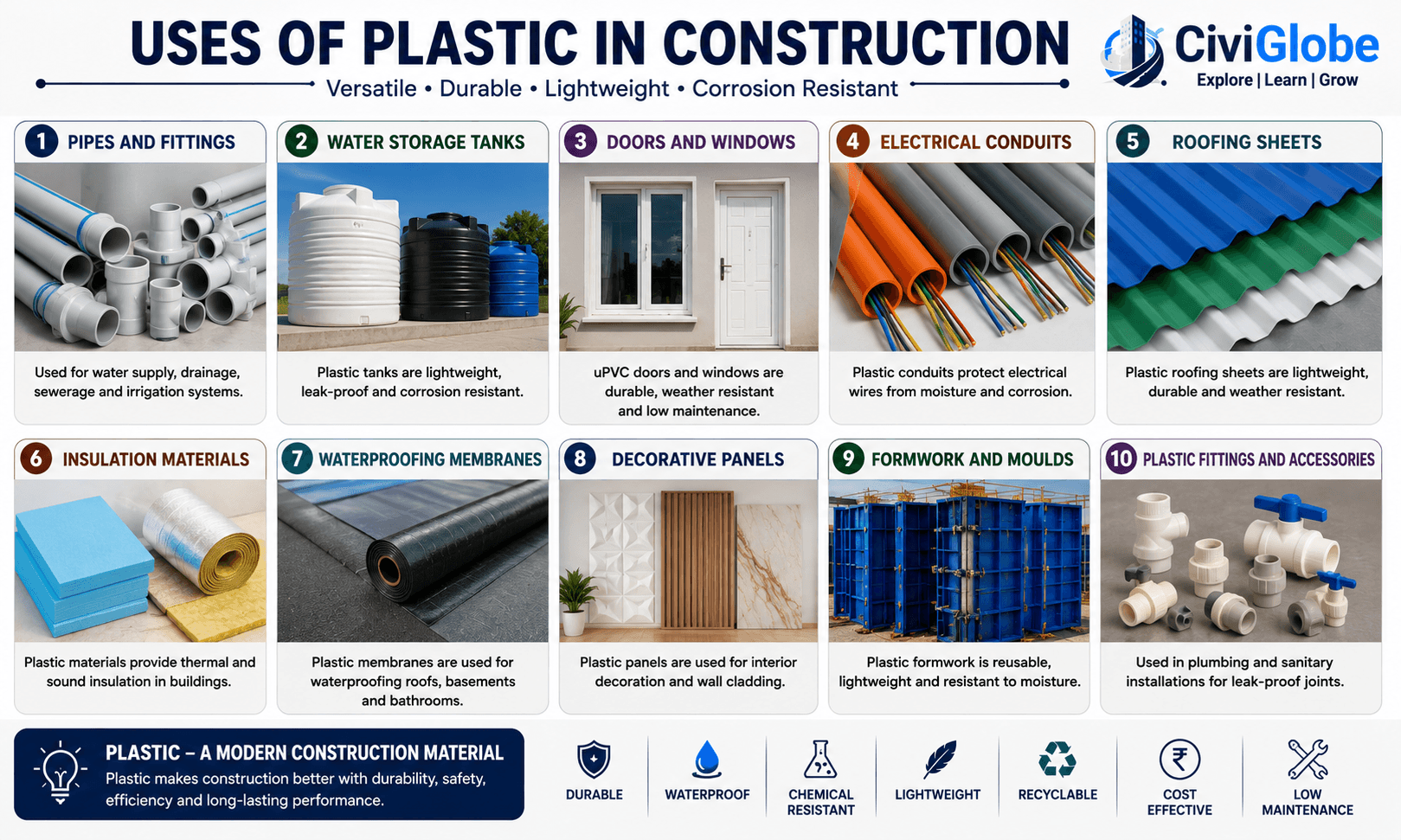
Plastic is commonly used in:
- Pipes and fittings
- Water storage tanks
- Doors and windows
- Electrical conduits
- Roofing sheets
- Insulation materials
- Decorative panels
- Waterproofing membranes
Difference Between Plastic and Glass
| Plastic | Glass |
|---|---|
| Lightweight | Heavy |
| Flexible | Brittle |
| Impact resistant | Easily breaks |
| Less transparent | Highly transparent |
| Easy to shape | Difficult to shape |
Conclusion
Plastic is an important construction material widely used in modern civil engineering due to its lightweight nature, durability, corrosion resistance, and versatility. Different types of plastics are used for various applications, making them an essential part of building construction.
Frequently Asked Questions (FAQ)
What is Plastic?
Plastic is a synthetic material made from polymers that can be molded into different shapes and is widely used in construction.
What are the Types of Plastic?
The main types of plastic are Thermoplastics, Thermosetting Plastics, PVC, Polyethylene, Polypropylene, and Acrylic Plastic.
What are the Uses of Plastic?
Plastic is used in pipes, tanks, doors, windows, insulation, and waterproofing applications.
Why is Plastic Used in Construction?
Plastic is lightweight, durable, waterproof, corrosion resistant, and easy to maintain.
प्लास्टिक क्या है?
प्लास्टिक एक कृत्रिम (Synthetic) या अर्ध-कृत्रिम (Semi-Synthetic) पदार्थ है, जिसे विभिन्न आकारों और रूपों में ढाला जा सकता है। यह हल्का, टिकाऊ, जलरोधी और संक्षारण प्रतिरोधी होता है, इसलिए निर्माण कार्यों में इसका व्यापक उपयोग किया जाता है।
प्लास्टिक के प्रकार
1. थर्मोप्लास्टिक्स
विशेषताएँ
- हल्का वजन
- पुनर्चक्रण योग्य ( Recyclable)
- लचीला
- आसानी से ढाला जा सकता है
उपयोग
- पाइप
- पानी की टंकियाँ
- विद्युत नलिकाएँ (Electrical Conduits)
2. थर्मोसेटिंग प्लास्टिक्स
विशेषताएँ
- उच्च मजबूती
- ऊष्मा प्रतिरोधी
- टिकाऊ
उपयोग
- विद्युत फिटिंग
- स्विच बोर्ड
- चिपकने वाले पदार्थ
3. पीवीसी
विशेषताएँ
- संक्षारण प्रतिरोधी ( Corrosion resistant)
- जलरोधी
- किफायती
उपयोग
- पाइप
- दरवाजे
- खिड़की के फ्रेम
4. पॉलीएथिलीन
विशेषताएँ
- रसायनों के प्रति प्रतिरोधी
- टिकाऊ
- नमी प्रतिरोधी
उपयोग
- पानी की टंकियाँ
- पैकेजिंग सामग्री
- इन्सुलेशन
5. पॉलीप्रोपाइलीन
विशेषताएँ
- हल्का
- मजबूत
- रासायनिक प्रतिरोधी
उपयोग
- पाइप
- भंडारण कंटेनर
- प्लास्टिक फिटिंग
6. ऐक्रेलिक प्लास्टिक
विशेषताएँ
- अधिक पारदर्शिता
- हल्का
- मौसम प्रतिरोधी
उपयोग
- स्काइलाइट
- सजावटी पैनल
- खिड़कियाँ
प्लास्टिक के गुण
- हल्का वजन
- टिकाऊ
- जलरोधी
- संक्षारण प्रतिरोधी
- रासायनिक प्रतिरोधी
- अच्छा विद्युत कुचालक
- आसानी से ढाला जा सकता है
प्लास्टिक के लाभ
- हल्का और परिवहन में आसान
- जंग नहीं लगता
- जलरोधी
- किफायती
- कम रखरखाव
- लंबी आयु
निर्माण कार्यों में प्लास्टिक के उपयोग
- पाइप और फिटिंग
- पानी की टंकियाँ
- दरवाजे और खिड़कियाँ
- विद्युत नलिकाएँ
- रूफिंग शीट
- इन्सुलेशन सामग्री
- सजावटी पैनल
- वाटरप्रूफिंग मेम्ब्रेन
प्लास्टिक और ग्लास में अंतर
| प्लास्टिक | ग्लास |
|---|---|
| हल्का | भारी |
| लचीला | भंगुर |
| आसानी से टूटता नहीं | आसानी से टूट सकता है |
| कम पारदर्शी | अधिक पारदर्शी |
| आकार देना आसान | आकार देना कठिन |
निष्कर्ष
प्लास्टिक आधुनिक निर्माण कार्यों में उपयोग होने वाली एक महत्वपूर्ण सामग्री है। इसकी हल्के वजन, टिकाऊपन, जलरोधी क्षमता और संक्षारण प्रतिरोध के कारण इसका उपयोग विभिन्न निर्माण कार्यों में व्यापक रूप से किया जाता है।
संबंधित पोस्ट
© CiviGlobe. All Rights Reserved.
Empowering Civil Engineering Students Worldwide