
Introduction
Paint is one of the most widely used finishing materials in civil engineering and construction. It is applied to surfaces to enhance appearance, provide protection against weathering, and increase the durability of structures. Paint is commonly used on walls, doors, windows, steel structures, bridges, and decorative works.
What is Paint?
Paint is a liquid or semi-liquid coating material applied to surfaces to protect them from moisture, corrosion, sunlight, and other environmental effects. It also improves the appearance and aesthetics of buildings and structures.
Types of Paint
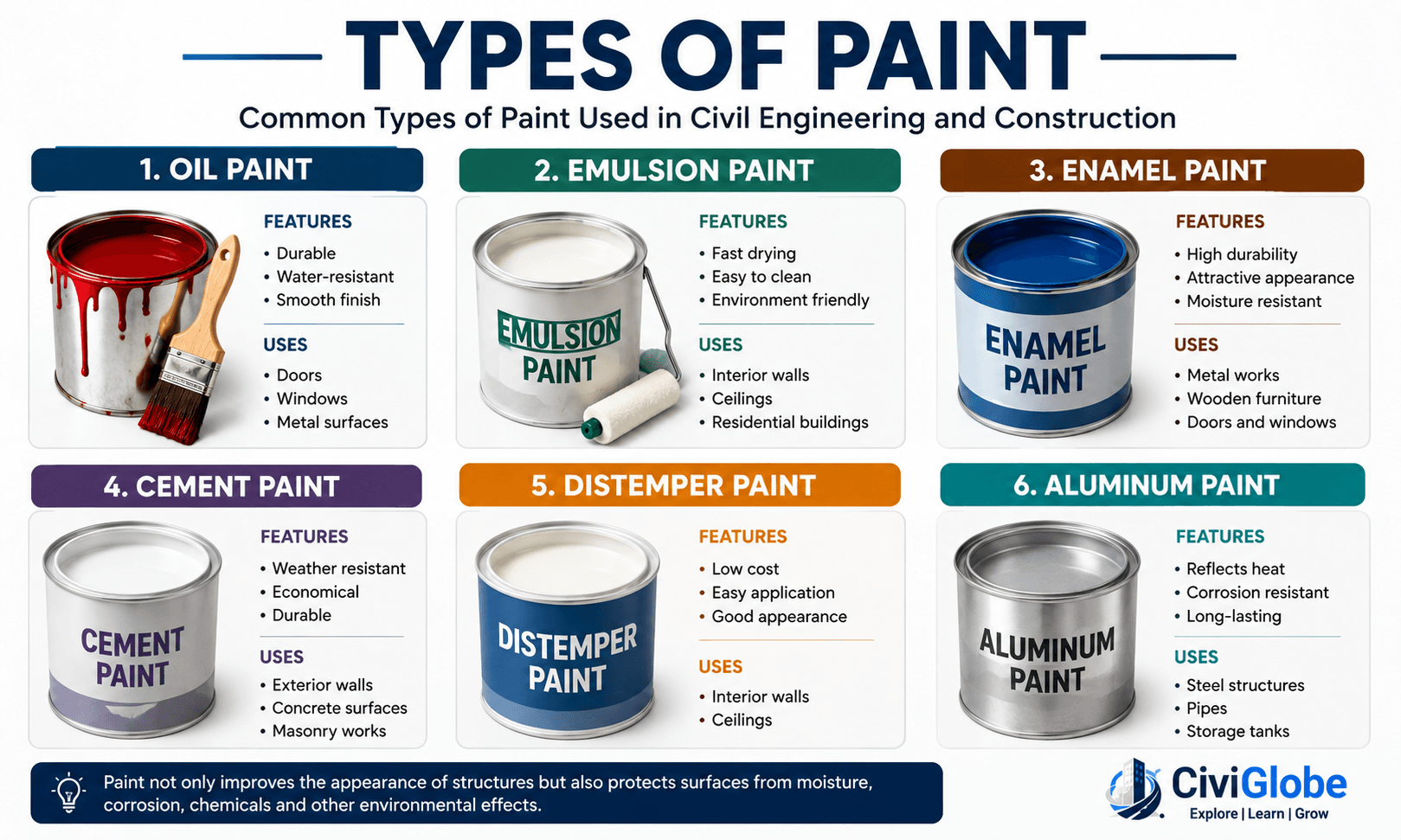
1. Oil Paint
Oil paint is prepared by mixing pigments with drying oils and is widely used for wood and metal surfaces.
Features:
- Durable
- Water-resistant
- Smooth finish
Uses:
- Doors
- Windows
- Metal surfaces
2. Emulsion Paint
Emulsion paint consists of pigments dispersed in water and synthetic resins.
Features:
- Fast drying
- Easy to clean
- Environment friendly
Uses:
- Interior walls
- Ceilings
- Residential buildings
3. Enamel Paint
Enamel paint provides a glossy and hard finish.
Features:
- High durability
- Attractive appearance
- Moisture resistant
Uses:
- Metal works
- Wooden furniture
- Doors and windows
4. Cement Paint
Cement paint is made from white cement, pigments, and additives.
Features:
- Weather resistant
- Economical
- Durable
Uses:
- Exterior walls
- Concrete surfaces
- Masonry works
5. Distemper Paint
Distemper paint is a water-based paint commonly used for interior walls.
Features:
- Low cost
- Easy application
- Good appearance
Uses:
- Interior walls
- Ceilings
6. Aluminum Paint
Aluminum paint contains aluminum particles suspended in varnish.
Features:
- Reflects heat
- Corrosion resistant
- Long-lasting
Uses:
- Steel structures
- Pipes
- Storage tanks
Properties of Paint
A good paint should possess the following properties:
- Good covering capacity
- Strong adhesion
- Durability
- Weather resistance
- Smooth finish
- Quick drying
- Resistance to moisture and corrosion
Advantages of Paint
- Improves appearance
- Protects surfaces from corrosion
- Increases durability
- Easy to apply
- Available in various colors
- Provides a smooth finish
Uses of Paint in Construction
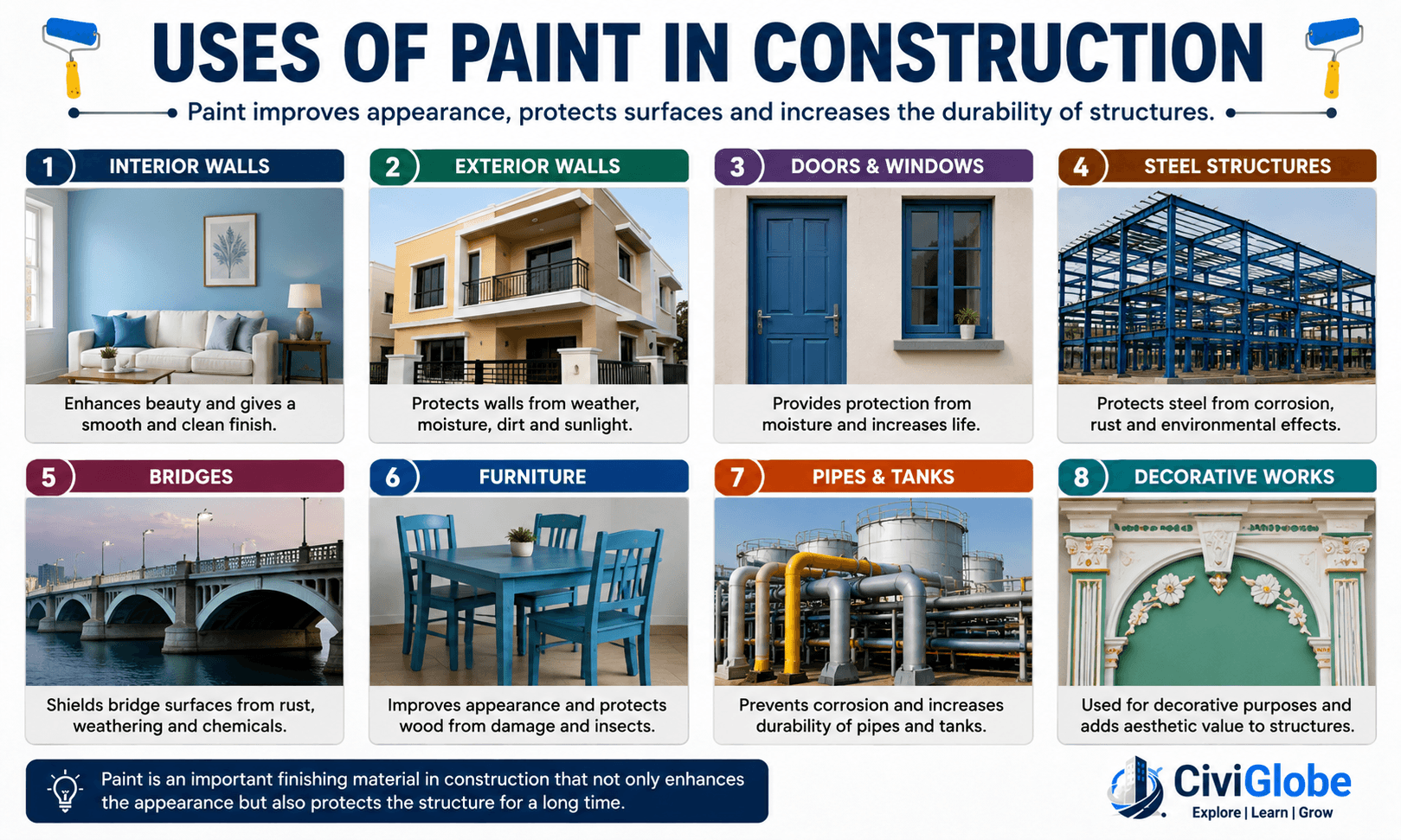
Paint is widely used in:
- Interior walls
- Exterior walls
- Doors and windows
- Steel structures
- Bridges
- Furniture
- Pipelines
- Decorative works
Difference Between Paint and Varnish
| Paint | Varnish |
|---|---|
| Contains pigments | Transparent coating |
| Available in different colors | Usually colorless |
| Hides surface texture | Preserves natural texture |
| Used for decoration and protection | Mainly used for protection |
Conclusion
Paint is an important finishing material used in civil engineering and building construction. It enhances the appearance of structures and protects surfaces from moisture, corrosion, and environmental effects. Different types of paint are selected based on the application and desired finish.
Frequently Asked Questions (FAQ)
What is Paint?
Paint is a protective and decorative coating material used on walls, metal surfaces, wood, and concrete structures.
What are the Types of Paint?
The main types of paint are Oil Paint, Emulsion Paint, Enamel Paint, Cement Paint, Distemper Paint, and Aluminum Paint.
What are the Uses of Paint?
Paint is used on walls, doors, windows, steel structures, bridges, furniture, and decorative works.
Why is Paint Used in Buildings?
Paint improves appearance, protects surfaces from corrosion, and increases durability.
पेंट क्या है? (What is Paint?)
पेंट एक तरल या अर्ध-तरल कोटिंग सामग्री है, जिसका उपयोग सतहों को नमी, जंग, धूप और अन्य पर्यावरणीय प्रभावों से बचाने तथा उनकी सुंदरता बढ़ाने के लिए किया जाता है।
पेंट के प्रकार
1. ऑयल पेंट (Oil Paint)
विशेषताएँ:
- टिकाऊ
- जलरोधी
- चिकनी सतह प्रदान करता है
उपयोग:
- दरवाजे
- खिड़कियाँ
- धातु की सतहें
2. इमल्शन पेंट (Emulsion Paint)
विशेषताएँ:
- जल्दी सूखता है
- साफ करना आसान
- पर्यावरण के अनुकूल
उपयोग:
- आंतरिक दीवारें
- छतें
3. एनामेल पेंट (Enamel Paint)
विशेषताएँ:
- चमकदार फिनिश
- टिकाऊ
- नमी प्रतिरोधी
उपयोग:
- धातु कार्य
- फर्नीचर
- दरवाजे और खिड़कियाँ
4. सीमेंट पेंट (Cement Paint)
विशेषताएँ:
- मौसम प्रतिरोधी
- किफायती
- टिकाऊ
उपयोग:
- बाहरी दीवारें
- कंक्रीट सतहें
5. डिस्टेम्पर पेंट (Distemper Paint)
विशेषताएँ:
- कम लागत
- लगाने में आसान
- अच्छा फिनिश
उपयोग:
- आंतरिक दीवारें
- छतें
6. एल्युमिनियम पेंट (Aluminum Paint)
विशेषताएँ:
- गर्मी परावर्तित करता है
- जंग प्रतिरोधी
- लंबे समय तक टिकाऊ
उपयोग:
- स्टील संरचनाएँ
- पाइप
- टैंक
पेंट के गुण
- अच्छी कवरेज क्षमता
- मजबूत आसंजन (Strong Adhesion)
- टिकाऊ
- मौसम प्रतिरोधी
- चिकनी फिनिश
- जल्दी सूखने वाला
पेंट के लाभ
- सुंदरता बढ़ाता है
- सतहों को जंग से बचाता है
- टिकाऊ बनाता है
- विभिन्न रंगों में उपलब्ध
निर्माण कार्यों में पेंट के उपयोग
- दीवारें
- दरवाजे
- खिड़कियाँ
- स्टील संरचनाएँ
- पुल
- फर्नीचर
- सजावटी कार्य
निष्कर्ष
पेंट एक महत्वपूर्ण फिनिशिंग सामग्री है, जो भवनों और संरचनाओं की सुंदरता बढ़ाने के साथ-साथ उन्हें नमी, जंग और पर्यावरणीय प्रभावों से भी सुरक्षित रखती है।
© CiviGlobe. All Rights Reserved.
Empowering Civil Engineering Students Worldwide