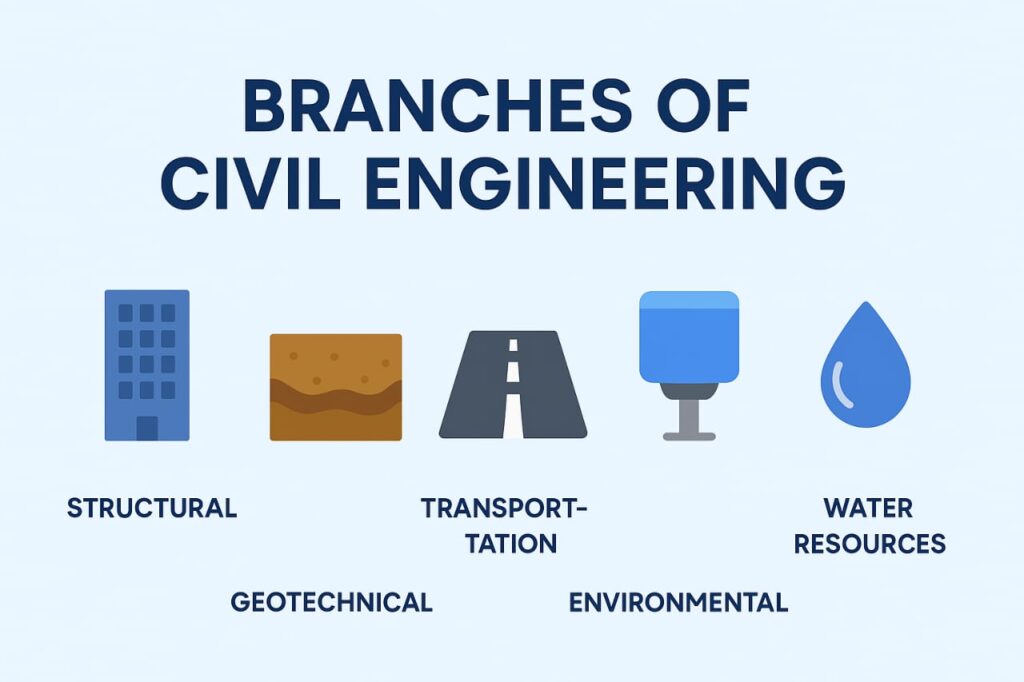
Branches of Civil Engineering – Explained with Examples
Civil engineering is a vast and diversified field that covers various specialized areas of study and work. Each branch focuses on a particular aspect of design, construction, and maintenance of infrastructure. Understanding these branches helps students and professionals identify their areas of interest and expertise.
1. Structural Engineering
This branch deals with the design and analysis of structures like buildings, bridges, and towers. The goal is to ensure that these structures are safe, stable, and durable under all possible loads and forces.
2. Geotechnical Engineering
It focuses on the study of soil, rock, and underground materials to ensure stable foundation design for structures. Geotechnical engineers perform soil testing and design suitable foundations based on site conditions.
3. Transportation Engineering
This branch covers the design, planning, and management of transportation systems such as roads, highways, railways, airports, and ports. The main objective is to ensure safe and efficient movement of people and goods.
4. Environmental Engineering
Environmental engineers work on projects related to pollution control, waste management, and sustainable development. Their main focus is to protect the environment and public health through proper design and management systems.
5. Water Resources Engineering
This branch deals with the management and utilization of water resources, including dams, canals, drainage systems, and flood control. It ensures the effective distribution and storage of water for agricultural, domestic, and industrial purposes.
6. Construction Engineering and Management
It involves planning, coordinating, and supervising construction projects. Construction engineers ensure that projects are completed on time, within budget, and according to design specifications.
7. Surveying and Geomatics Engineering
This branch focuses on measuring and mapping land areas using tools like total stations, GPS, and drones. Accurate surveying data is essential for planning and construction of all types of civil projects.
8. Urban and Regional Planning
Urban planners design cities and towns for organized growth. They focus on efficient land use, public transport systems, and sustainable urban development to improve living conditions.
Conclusion
Civil engineering branches collectively shape the modern world. Each branch plays a crucial role in developing infrastructure and maintaining sustainable environments. For students, learning about these branches helps choose the right career path based on personal interests and goals.
🔗 Previous English Post: What is Civil Engineering? (Full Guide)
सिविल इंजीनियरिंग की शाखाएँ
सिविल इंजीनियरिंग एक व्यापक और विविध क्षेत्र है जिसमें कई विशिष्ट शाखाएँ शामिल होती हैं। हर शाखा निर्माण, डिज़ाइन और रखरखाव के किसी न किसी विशेष भाग पर केंद्रित होती है। इन शाखाओं को समझने से छात्रों और पेशेवरों को अपने रुचि क्षेत्र की पहचान करने में मदद मिलती है।
1. संरचनात्मक इंजीनियरिंग (Structural Engineering)
यह शाखा इमारतों, पुलों और टावरों जैसी संरचनाओं के डिज़ाइन और विश्लेषण से संबंधित है। इसका मुख्य उद्देश्य इन संरचनाओं को सुरक्षित, स्थिर और टिकाऊ बनाना है।
2. भू-तकनीकी इंजीनियरिंग (Geotechnical Engineering)
यह मिट्टी, चट्टानों और भूमिगत सामग्रियों के अध्ययन से संबंधित है ताकि संरचनाओं के लिए मजबूत नींव तैयार की जा सके।
3. परिवहन इंजीनियरिंग (Transportation Engineering)
यह शाखा सड़कों, राजमार्गों, रेलवे, हवाई अड्डों और बंदरगाहों जैसी परिवहन प्रणालियों की योजना, डिज़ाइन और प्रबंधन से संबंधित है।
4. पर्यावरण इंजीनियरिंग (Environmental Engineering)
यह प्रदूषण नियंत्रण, अपशिष्ट प्रबंधन और सतत विकास से संबंधित परियोजनाओं पर काम करती है। इसका उद्देश्य पर्यावरण और जनस्वास्थ्य की रक्षा करना है।
5. जल संसाधन इंजीनियरिंग (Water Resources Engineering)
यह बांधों, नहरों, जल निकासी प्रणालियों और बाढ़ नियंत्रण जैसी परियोजनाओं के डिज़ाइन और प्रबंधन से जुड़ी है।
6. निर्माण इंजीनियरिंग एवं प्रबंधन (Construction Engineering and Management)
यह निर्माण कार्यों की योजना, समन्वय और निगरानी से संबंधित है ताकि प्रोजेक्ट समय पर और बजट के भीतर पूरा हो सके।
7. सर्वेक्षण एवं जियोमैटिक्स इंजीनियरिंग (Surveying and Geomatics)
यह भूमि माप और नक्शा बनाने से जुड़ी शाखा है, जिसमें GPS, टोटल स्टेशन और ड्रोन जैसी तकनीकें उपयोग की जाती हैं।
8. शहरी एवं क्षेत्रीय योजना (Urban and Regional Planning)
यह शहरों और कस्बों की सुव्यवस्थित योजना और विकास से जुड़ी है ताकि रहने योग्य और सतत वातावरण तैयार किया जा सके।
निष्कर्ष
सिविल इंजीनियरिंग की सभी शाखाएँ मिलकर हमारे समाज और बुनियादी ढाँचे को आकार देती हैं। हर शाखा का अपना महत्व है और विद्यार्थियों के लिए इनका ज्ञान करियर चयन में सहायक होता है।
🔗 पिछला हिन्दी पोस्ट: सिविल इंजीनियरिंग क्या है? (पूर्ण गाइड)
Good placement
Thank you for your feedback!