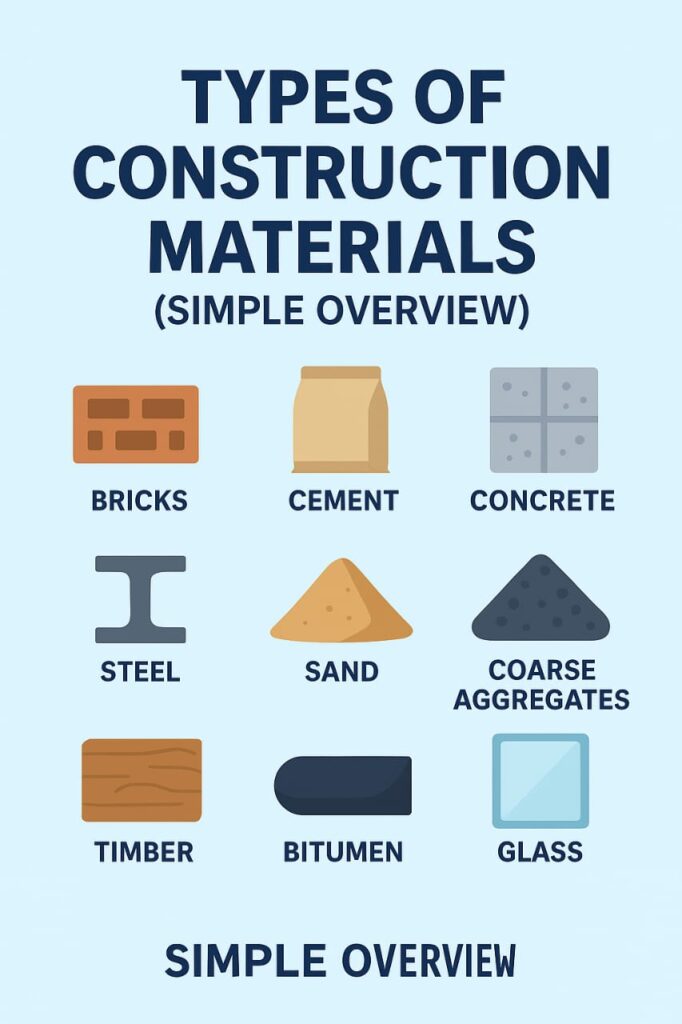
Types of Construction Materials (Simple Overview)
Construction materials are the basic building blocks of any structure. Choosing the right material affects strength, durability, cost, and the overall life of the structure. Below are common materials used in civil engineering along with short explanations and typical uses.
1. Bricks
Small rectangular blocks made from clay or fly ash. Used for walls, partitions, and masonry. Affordable and easy to work with.
2. Cement
A powder (usually OPC or PPC) that binds aggregates together to make concrete and mortar. Cement quality affects strength and setting time.
3. Concrete
A mixture of cement, sand, aggregates, and water. Used in foundations, slabs, beams, columns, and pavements. Strength depends on mix design.
4. Steel (Reinforcement)
High-strength material used to resist tensile forces. RCC combines concrete (good in compression) with steel (good in tension).
5. Sand
Fine aggregate used in mortar and concrete. Clean, well-graded sand improves strength and workability.
6. Coarse Aggregates
Gravel or crushed stone used to provide bulk and strength to concrete. Size and grading influence properties.
7. Timber (Wood)
Used for formwork, temporary structures, small buildings, doors, and windows. Needs protection from moisture and pests.
8. Bitumen (Asphalt)
Binder used in road construction, waterproofing, and roofing.
9. Glass
Used for facades, windows, and interior partitions. Modern glass offers strength and energy efficiency.
10. Masonry Units
Concrete blocks and AAC blocks used as alternatives to bricks; faster construction and better thermal properties.
11. Paints and Coatings
Protect surfaces from weather and corrosion and enhance appearance.
12. Admixtures
Chemicals added to concrete to modify its properties (e.g., plasticizers, accelerators, retarders).
Quick Tips
- Always check material quality.
- Local availability and cost matter.
- Prefer eco-friendly or recycled materials.
- Store materials properly (keep cement dry, cover steel).
Explore More:
Conclusion
Construction materials form the core of every building and infrastructure. Understanding these materials helps in better planning, designing, and building.
निर्माण सामग्री के प्रकार (सरल परिचय)
निर्माण सामग्री किसी भी संरचना के मूल तत्व होते हैं। सही सामग्री का चुनाव ताकत, टिकाऊपन, लागत और संरचना के जीवनकाल को प्रभावित करता है। यहाँ सिविल इंजीनियरिंग में उपयोग होने वाली सामान्य सामग्रियों का सरल विवरण दिया गया है।
1. ईंट (Bricks)
मिट्टी या फ्लाई ऐश से बनी ईंटें। दीवारों और चरों में उपयोग होती हैं। सस्ती और काम करने में आसान।
2. सीमेंट (Cement)
एक पाउडर (OPC/PPC) जो एग्रीगेट्स को जोड़कर कंक्रीट और मोर्टार बनाता है।
3. कंक्रीट (Concrete)
सीमेंट, रेत, बजरी और पानी का मिश्रण। फाउंडेशन, स्लैब, बीम और कॉलम में उपयोग।
4. स्टील (रीइन्फोर्समेंट)
उच्च-मजबूत सामग्री जो टेंसाइल बलों को वहन करती है। RCC में सबसे महत्वपूर्ण भूमिका।
5. रेत (Sand)
मोर्टार और कंक्रीट में उपयोग होने वाला फाइन एग्रीगेट।
6. मोटा एग्रीगेट
ग्रेवल/क्रश्ड स्टोन जो कंक्रीट को बल और आयतन देता है।
7. लकड़ी (Timber)
फॉर्मवर्क, अस्थायी संरचनाओं और दरवाजों-खिड़कियों में उपयोग।
8. बिटुमेन (Asphalt)
सड़कों और वाटरप्रूफिंग में उपयोग होने वाला बाइंडर।
9. काँच (Glass)
फैसाड और खिड़कियों में उपयोग।
10. ब्लॉक्स
AAC और कंक्रीट ब्लॉक्स — तेज निर्माण और बेहतर थर्मल गुण।
11. पेंट्स और कोटिंग्स
संरचनाओं को सुरक्षित रखने और सुंदर बनाने के लिए उपयोगी।
12. एडमिक्सचर
कंक्रीट के गुण बदलने के लिए मिलाए जाने वाले केमिकल्स।
संक्षेप सुझाव
- सामग्री की गुणवत्ता की जाँच करते रहें।
- स्थानीय उपलब्धता और लागत पर ध्यान दें।
- पर्यावरण अनुकूल सामग्री चुनें।
- सही भंडारण जरूरी है (सीमेंट सूखा रखें, स्टील ढँका रखें)।
और पोस्ट पढ़ें:
निष्कर्ष
निर्माण सामग्री हर संरचना की सफलता में महत्वपूर्ण भूमिका निभाती है। इन्हें समझने से बेहतर निर्माण संभव होता है।