Introduction
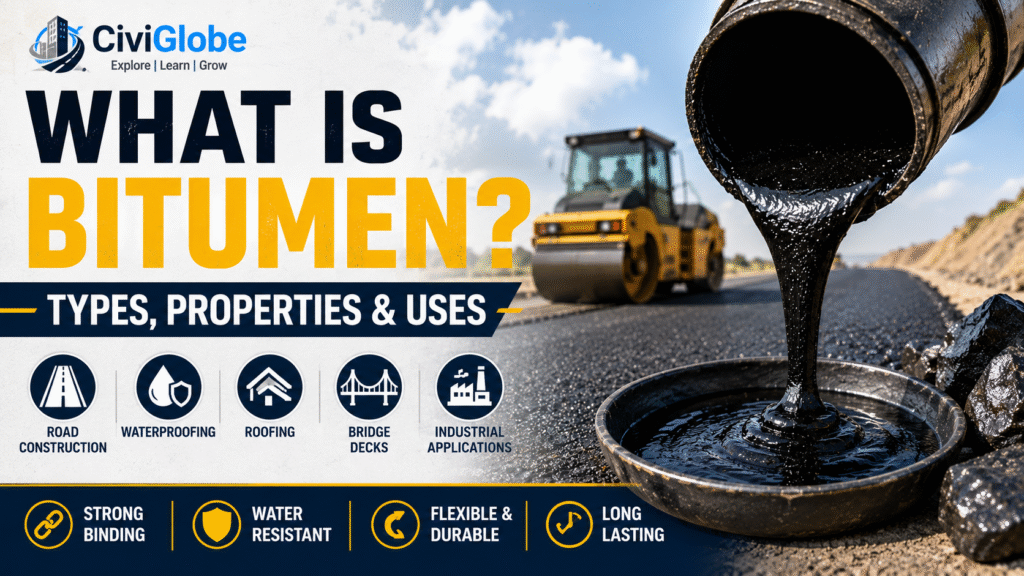
Bitumen is a black, sticky, and highly viscous material obtained mainly from crude oil refining. It is one of the most important construction materials used in road construction and waterproofing works. Due to its excellent binding and waterproofing properties, bitumen is widely used in highways, airport runways, roofing, and industrial applications.
What is Bitumen?
Bitumen is a hydrocarbon-based material used as a binder in road construction. It binds aggregates together and provides strength, flexibility, and water resistance to pavements. Bitumen is obtained from petroleum refining and should not be confused with tar, which is obtained from coal.
Types of Bitumen
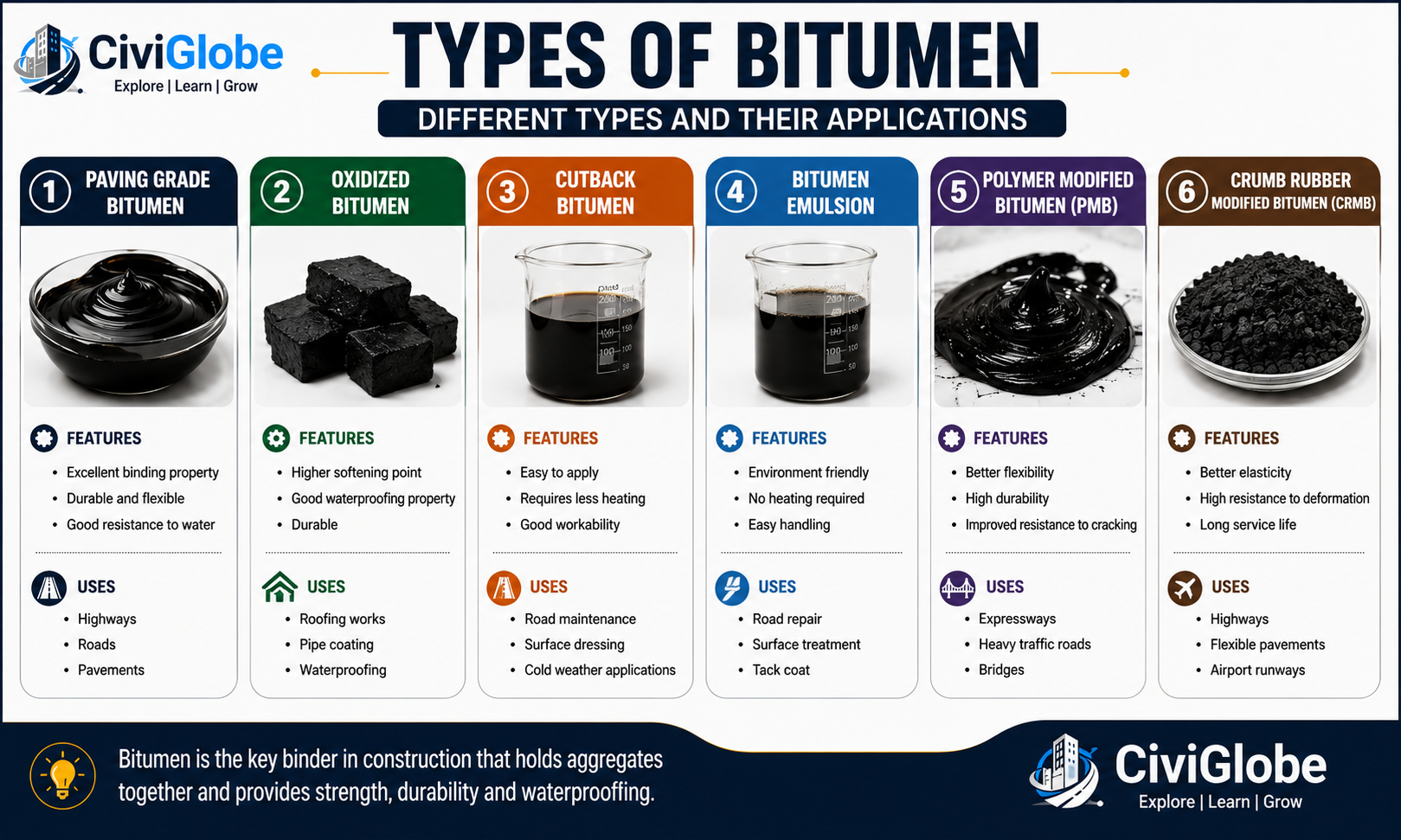
1. Paving Grade Bitumen
Paving grade bitumen is the most commonly used type of bitumen for road construction.
Features:
- Excellent binding property
- Durable and flexible
- Good resistance to water
Uses:
- Highways
- Roads
- Pavements
2. Oxidized Bitumen
Oxidized bitumen is produced by blowing air through hot bitumen to improve its properties.
Features:
- Higher softening point
- Good waterproofing property
- Durable
Uses:
- Roofing works
- Pipe coating
- Waterproofing
3. Cutback Bitumen
Cutback bitumen is produced by mixing bitumen with volatile solvents to reduce viscosity.
Features:
- Easy to apply
- Requires less heating
- Good workability
Uses:
- Road maintenance
- Surface dressing
- Cold weather applications
4. Bitumen Emulsion
Bitumen emulsion is a mixture of bitumen, water, and emulsifying agents.
Features:
- Environment friendly
- No heating required
- Easy handling
Uses:
- Road repair
- Surface treatment
- Tack coat
5. Polymer Modified Bitumen (PMB)
Polymer modified bitumen contains polymers to improve performance.
Features:
- Better flexibility
- High durability
- Improved resistance to cracking
Uses:
- Expressways
- Heavy traffic roads
- Bridges
6. Crumb Rubber Modified Bitumen (CRMB)
CRMB is produced by mixing crumb rubber with bitumen.
Features:
- Better elasticity
- High resistance to deformation
- Long service life
Uses:
- Highways
- Flexible pavements
- Airport runways
Properties of Bitumen
A good quality bitumen should possess the following properties:
- Excellent binding property
- Waterproof in nature
- Highly adhesive
- Durable and flexible
- Resistant to weathering
- Thermoplastic material
- Provides good stability to roads
Advantages of Bitumen
- Excellent waterproofing property
- Strong binding capability
- Flexible in nature
- Durable and economical
- Easy maintenance
- Resistant to weather effects
Uses of Bitumen in Construction
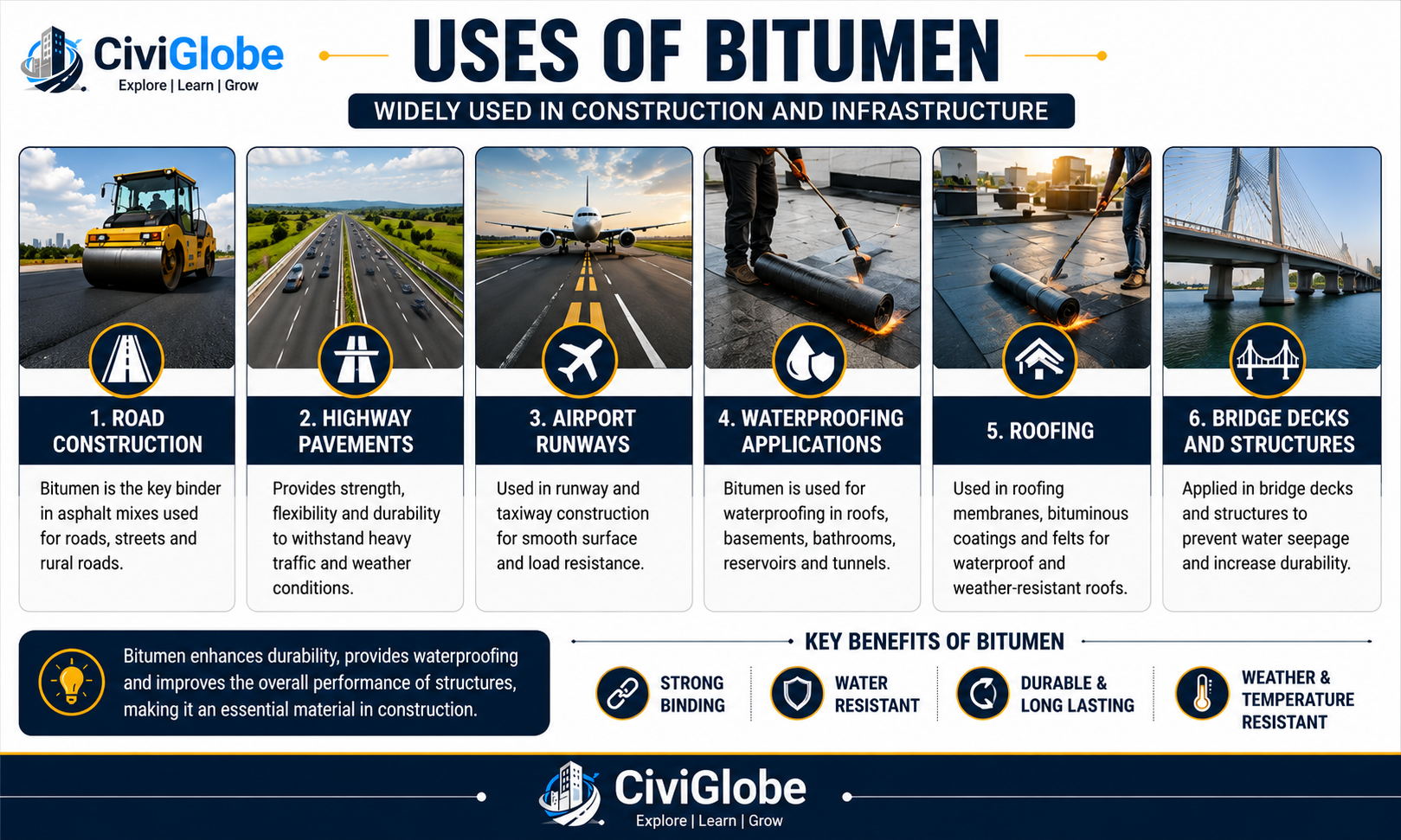
Bitumen is used in:
- Road construction
- Highway pavements
- Airport runways
- Waterproofing works
- Roofing applications
- Bridge decks
- Industrial flooring
- Damp-proof courses
Difference Between Bitumen and Tar
| Bitumen | Tar |
|---|---|
| Obtained from petroleum | Obtained from coal |
| More flexible | Comparatively brittle |
| Widely used in roads | Limited applications |
| Better waterproofing property | Less waterproof |
| Environment friendly | Produces more fumes |
Conclusion
Bitumen is an important construction material mainly used in road construction and waterproofing works. Due to its excellent binding property, flexibility, and durability, it plays a vital role in modern infrastructure development.
Frequently Asked Questions (FAQ)
What is Bitumen?
Bitumen is a black, sticky material obtained from petroleum and mainly used in road construction and waterproofing works.
Is Bitumen and Tar the Same?
No. Bitumen is obtained from petroleum, whereas tar is obtained from coal.
Why is Bitumen Used in Roads?
Bitumen acts as a binder and provides strength, flexibility, and water resistance to pavements.
What are the Main Uses of Bitumen?
Bitumen is used in roads, airport runways, roofing, waterproofing, and industrial flooring.
बिटुमेन क्या है?
बिटुमेन एक काला, चिपचिपा और गाढ़ा पदार्थ है, जो मुख्य रूप से पेट्रोलियम के शोधन से प्राप्त किया जाता है। इसका उपयोग सड़क निर्माण, जलरोधक कार्यों तथा छतों की सुरक्षा में किया जाता है। इसकी बाइंडिंग क्षमता और जलरोधक गुण इसे एक महत्वपूर्ण निर्माण सामग्री बनाते हैं।
बिटुमेन के प्रकार
1. पेविंग ग्रेड बिटुमेन
यह सड़क निर्माण में सबसे अधिक उपयोग किया जाने वाला बिटुमेन है।
विशेषताएँ:
- अच्छा बाइंडिंग गुण
- टिकाऊ
- जलरोधक
उपयोग:
- सड़कें
- राजमार्ग
- पेवमेंट
2. ऑक्सीकृत बिटुमेन
गर्म बिटुमेन में हवा प्रवाहित करके तैयार किया जाता है।
विशेषताएँ:
- उच्च Softening Point
- जलरोधक
- टिकाऊ
उपयोग:
- छतों की सुरक्षा
- पाइप कोटिंग
- वाटरप्रूफिंग
3. कटबैक बिटुमेन
इसमें सॉल्वेंट मिलाकर इसकी चिपचिपाहट कम की जाती है।
विशेषताएँ:
- आसानी से उपयोग किया जा सकता है
- कम गर्म करने की आवश्यकता
- अच्छी कार्यक्षमता
उपयोग:
- सड़क मरम्मत
- Surface Dressing
- ठंडे क्षेत्रों में
4. बिटुमेन इमल्शन
यह बिटुमेन, पानी तथा इमल्सीफाइंग एजेंट का मिश्रण है।
विशेषताएँ:
- पर्यावरण के अनुकूल
- गर्म करने की आवश्यकता नहीं
- आसान हैंडलिंग
उपयोग:
- सड़क मरम्मत
- Surface Treatment
- Tack Coat
5. Polymer Modified Bitumen (PMB)
इसमें पॉलिमर मिलाकर इसकी गुणवत्ता बढ़ाई जाती है।
विशेषताएँ:
- बेहतर लचीलापन
- अधिक टिकाऊ
- दरारों के प्रति प्रतिरोधी
उपयोग:
- एक्सप्रेसवे
- भारी यातायात वाली सड़कें
- पुल
6. Crumb Rubber Modified Bitumen (CRMB)
यह रबर के कणों को मिलाकर तैयार किया जाता है।
विशेषताएँ:
- बेहतर लोच
- अधिक टिकाऊ
- लंबी सेवा आयु
उपयोग:
- राजमार्ग
- फ्लेक्सिबल पेवमेंट
- एयरपोर्ट रनवे
बिटुमेन के गुण
- अच्छा बाइंडिंग गुण
- जलरोधक प्रकृति
- अधिक चिपकने की क्षमता
- टिकाऊ और लचीला
- मौसम के प्रभावों के प्रति प्रतिरोधी
- गर्म करने पर नरम तथा ठंडा होने पर कठोर
बिटुमेन के लाभ
- उत्कृष्ट जलरोधक गुण
- मजबूत बाइंडिंग क्षमता
- लचीला
- किफायती
- रखरखाव आसान
- मौसम के प्रभावों के प्रति प्रतिरोधी
निर्माण कार्यों में बिटुमेन के उपयोग
- सड़क निर्माण
- राजमार्ग
- एयरपोर्ट रनवे
- वाटरप्रूफिंग
- छतों की सुरक्षा
- ब्रिज डेक
- औद्योगिक फर्श
बिटुमेन और तार में अंतर
| बिटुमेन | तार |
|---|---|
| पेट्रोलियम से प्राप्त | कोयले से प्राप्त |
| अधिक लचीला | कम लचीला |
| सड़क निर्माण में व्यापक उपयोग | सीमित उपयोग |
| अच्छा जलरोधक | अपेक्षाकृत कम |
निष्कर्ष
बिटुमेन सड़क निर्माण तथा जलरोधक कार्यों में प्रयुक्त एक महत्वपूर्ण निर्माण सामग्री है। इसकी मजबूती, लचीलापन और जलरोधक गुण आधुनिक इंफ्रास्ट्रक्चर में इसे अत्यंत उपयोगी बनाते हैं।
© CiviGlobe. All Rights Reserved.
Empowering Civil Engineering Students Worldwide