Introduction
Mortar is a workable paste used in construction to bind bricks, stones, and other masonry units together. It is made by mixing a binding material (such as cement or lime), fine aggregate (sand), and water. Mortar plays an important role in providing strength, stability, and durability to masonry structures.
Read Also:
➡ What is Cement? Types, Properties & Uses
➡ What is Sand? Types, Properties & Uses
➡ What is Brick? Types, Properties & Uses
What is Mortar?
Mortar is a mixture of cement or lime, sand, and water used to join bricks, stones, and concrete blocks in construction work. It fills gaps between masonry units and helps distribute loads evenly.
Main Components of Mortar
1. Binding Material
The binding material provides strength and bonding properties to mortar.
Examples:
- Cement
- Lime
2. Fine Aggregate
Fine aggregate improves workability and reduces shrinkage.
Examples:
- River Sand
- Manufactured Sand (M-Sand)
3. Water
Water is added to make the mortar workable and to initiate the setting process.
Types of Mortar
1. Cement Mortar
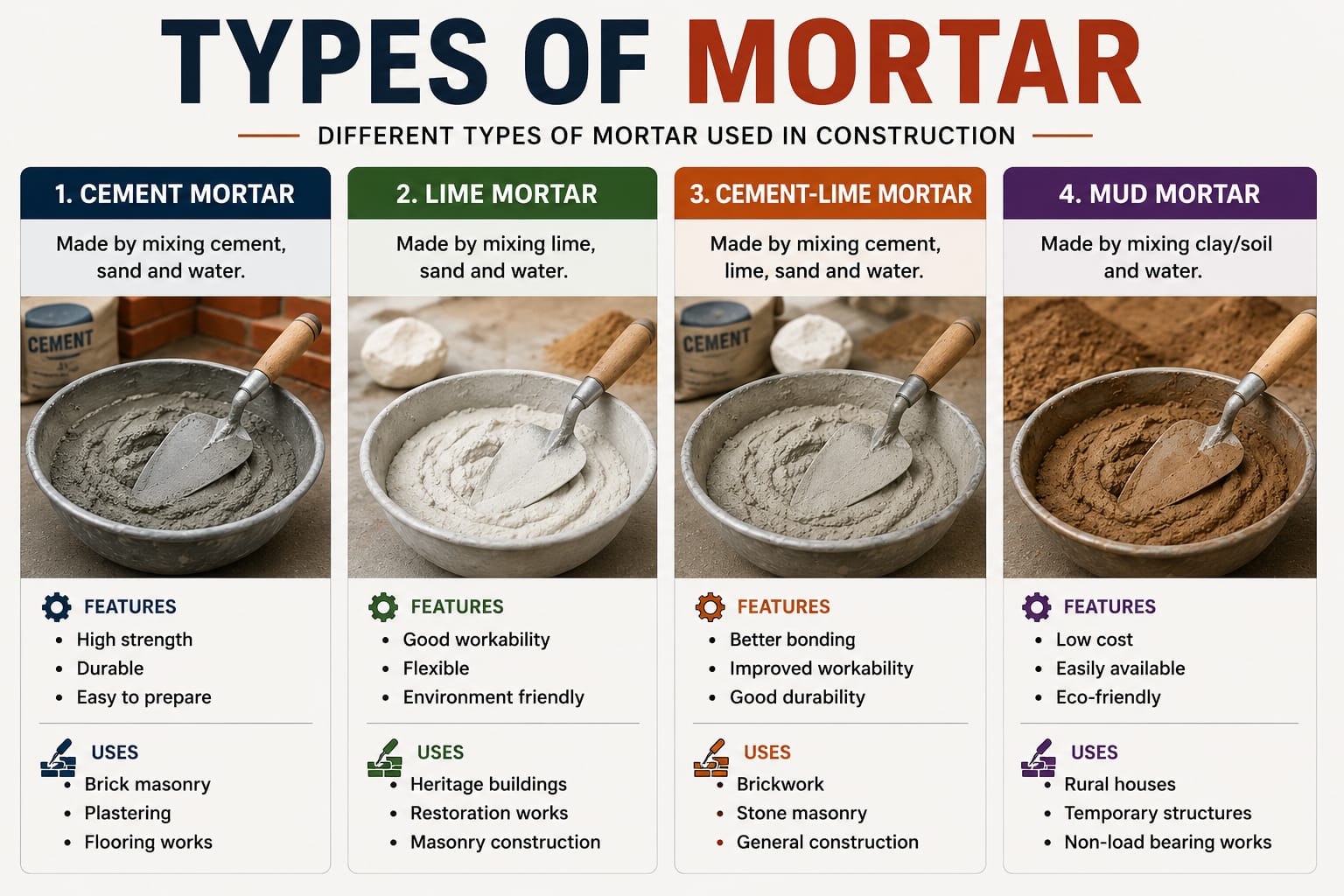
Cement mortar is prepared by mixing cement, sand, and water.
Features:
- High strength
- Durable
- Easy to prepare
Uses:
- Brick masonry
- Plastering
- Flooring works
2. Lime Mortar
Lime mortar is made by mixing lime, sand, and water.
Features:
- Good workability
- Flexible
- Environment friendly
Uses:
- Heritage buildings
- Restoration works
- Masonry construction
3. Cement-Lime Mortar
This mortar is prepared using cement, lime, sand, and water.
Features:
- Better bonding
- Improved workability
- Good durability
Uses:
- Brickwork
- Stone masonry
- General construction
4. Mud Mortar
Mud mortar is made from clay, soil, and water.
Features:
- Low cost
- Easily available
- Eco-friendly
Uses:
- Rural houses
- Temporary structures
Properties of Good Mortar
A good mortar should have the following properties:
- Good workability
- Adequate strength
- Strong bonding capability
- Water resistance
- Durability
- Easy application
Advantages of Mortar
- Provides strong bonding between masonry units
- Distributes loads uniformly
- Improves structural stability
- Fills joints and gaps effectively
- Enhances durability of structures
Uses of Mortar
- Brick masonry
- Stone masonry
- Plastering
- Pointing works
- Flooring works
- Repair and maintenance works
Common Mortar Mix Ratios
| Mortar Type | Cement : Sand Ratio |
|---|---|
| Brick Masonry | 1:6 |
| Plastering | 1:4 to 1:6 |
| Pointing | 1:3 |
| Rich Mortar | 1:3 |
Difference Between Mortar and Concrete
| Mortar | Concrete |
|---|---|
| Contains cement, sand, and water | Contains cement, sand, aggregate, and water |
| Used for binding masonry units | Used for structural members |
| No coarse aggregate | Contains coarse aggregate |
| Lower strength | Higher strength |
Conclusion
Mortar is an essential construction material used to bind masonry units and provide stability to structures. Depending on the project requirements, different types of mortar such as cement mortar, lime mortar, cement-lime mortar, and mud mortar can be used.
मोर्टार क्या है? प्रकार, गुण एवं उपयोग
परिचय
मोर्टार निर्माण कार्य में उपयोग किया जाने वाला एक मिश्रण है, जिसका उपयोग ईंटों, पत्थरों तथा अन्य चिनाई सामग्री को आपस में जोड़ने के लिए किया जाता है। यह सामान्यतः बाइंडिंग सामग्री, रेत और पानी से बनाया जाता है।
यह भी पढ़ें:
➡ Cement क्या है? प्रकार, गुण एवं उपयोग
➡ Sand क्या है? प्रकार, गुण एवं उपयोग
➡ Brick क्या है? प्रकार, गुण एवं उपयोग
मोर्टार क्या है?
मोर्टार सीमेंट या चूना, रेत और पानी का मिश्रण होता है जिसका उपयोग ईंटों, पत्थरों तथा कंक्रीट ब्लॉकों को जोड़ने के लिए किया जाता है। यह जोड़ों को भरता है तथा भार को समान रूप से वितरित करने में सहायता करता है।
मोर्टार के मुख्य घटक
1. बाइंडिंग सामग्री
यह मोर्टार को मजबूती और बंधन क्षमता प्रदान करती है।
उदाहरण:
- सीमेंट
- चूना
2. महीन एग्रीगेट
यह कार्यक्षमता बढ़ाता है और संकुचन कम करता है।
उदाहरण:
- नदी की रेत
- एम-सैंड
3. पानी
पानी मोर्टार को कार्य योग्य बनाता है तथा सेटिंग प्रक्रिया शुरू करता है।
मोर्टार के प्रकार
1. सीमेंट मोर्टार
सीमेंट, रेत और पानी को मिलाकर बनाया जाता है।
विशेषताएँ:
- अधिक मजबूती
- टिकाऊ
- आसानी से तैयार होने वाला
उपयोग:
- ईंट चिनाई
- प्लास्टर कार्य
- फर्श निर्माण
2. लाइम मोर्टार
चूना, रेत और पानी से बनाया जाता है।
विशेषताएँ:
- अच्छी कार्यक्षमता
- लचीलापन
- पर्यावरण अनुकूल
उपयोग:
- ऐतिहासिक भवन
- पुनर्स्थापन कार्य
- चिनाई कार्य
3. सीमेंट-लाइम मोर्टार
सीमेंट, चूना, रेत और पानी से तैयार किया जाता है।
विशेषताएँ:
- बेहतर बंधन
- अच्छी कार्यक्षमता
- टिकाऊ
उपयोग:
- ईंट निर्माण
- पत्थर चिनाई
- सामान्य निर्माण कार्य
4. मिट्टी मोर्टार
मिट्टी और पानी से तैयार किया जाता है।
विशेषताएँ:
- कम लागत
- आसानी से उपलब्ध
- पर्यावरण अनुकूल
उपयोग:
- ग्रामीण मकान
- अस्थायी संरचनाएँ
अच्छे मोर्टार के गुण
एक अच्छे मोर्टार में निम्न गुण होने चाहिए:
- अच्छी कार्यक्षमता
- पर्याप्त मजबूती
- मजबूत बंधन क्षमता
- जल प्रतिरोध
- टिकाऊपन
- आसानी से लगाने योग्य
मोर्टार के लाभ
- चिनाई इकाइयों के बीच मजबूत बंधन प्रदान करता है।
- भार को समान रूप से वितरित करता है।
- संरचना की स्थिरता बढ़ाता है।
- जोड़ों और रिक्त स्थानों को भरता है।
- संरचना की आयु बढ़ाता है।
मोर्टार के उपयोग
- ईंट चिनाई
- पत्थर चिनाई
- प्लास्टर कार्य
- पॉइंटिंग कार्य
- फर्श निर्माण
- मरम्मत कार्य
मोर्टार के सामान्य मिश्रण अनुपात
| कार्य | सीमेंट : रेत अनुपात |
|---|---|
| ईंट चिनाई | 1:6 |
| प्लास्टर | 1:4 से 1:6 |
| पॉइंटिंग | 1:3 |
| रिच मोर्टार | 1:3 |
मोर्टार और कंक्रीट में अंतर
| मोर्टार | कंक्रीट |
|---|---|
| सीमेंट, रेत और पानी से बनता है | सीमेंट, रेत, एग्रीगेट और पानी से बनता है |
| चिनाई इकाइयों को जोड़ने के लिए उपयोग होता है | संरचनात्मक कार्यों में उपयोग होता है |
| मोटा एग्रीगेट नहीं होता | मोटा एग्रीगेट होता है |
| कम मजबूती | अधिक मजबूती |
निष्कर्ष
मोर्टार निर्माण कार्य में उपयोग होने वाली एक महत्वपूर्ण सामग्री है जो ईंटों और पत्थरों को जोड़ने का कार्य करती है। विभिन्न निर्माण आवश्यकताओं के अनुसार सीमेंट मोर्टार, लाइम मोर्टार, सीमेंट-लाइम मोर्टार तथा मिट्टी मोर्टार का उपयोग किया जाता है।
Previous Posts
© CiviGlobe. All Rights Reserved.
Empowering Civil Engineering Students Worldwide