Introduction
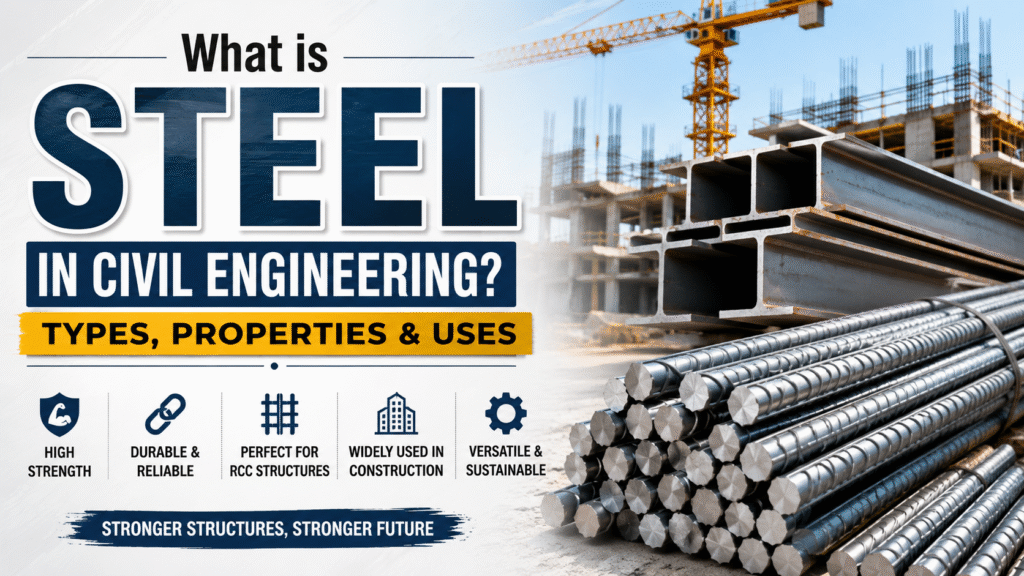
Steel is one of the most important construction materials used in civil engineering. It is widely used in buildings, bridges, dams, and other structures because of its high strength, durability, and ductility. Steel provides tensile strength to reinforced concrete structures and plays a vital role in modern construction.
What is Steel?
Steel is an alloy of iron and carbon containing a small amount of other elements such as manganese, silicon, sulfur, and phosphorus. It is widely used in construction due to its high tensile strength, flexibility, and durability.
Types of Steel
1. Mild Steel
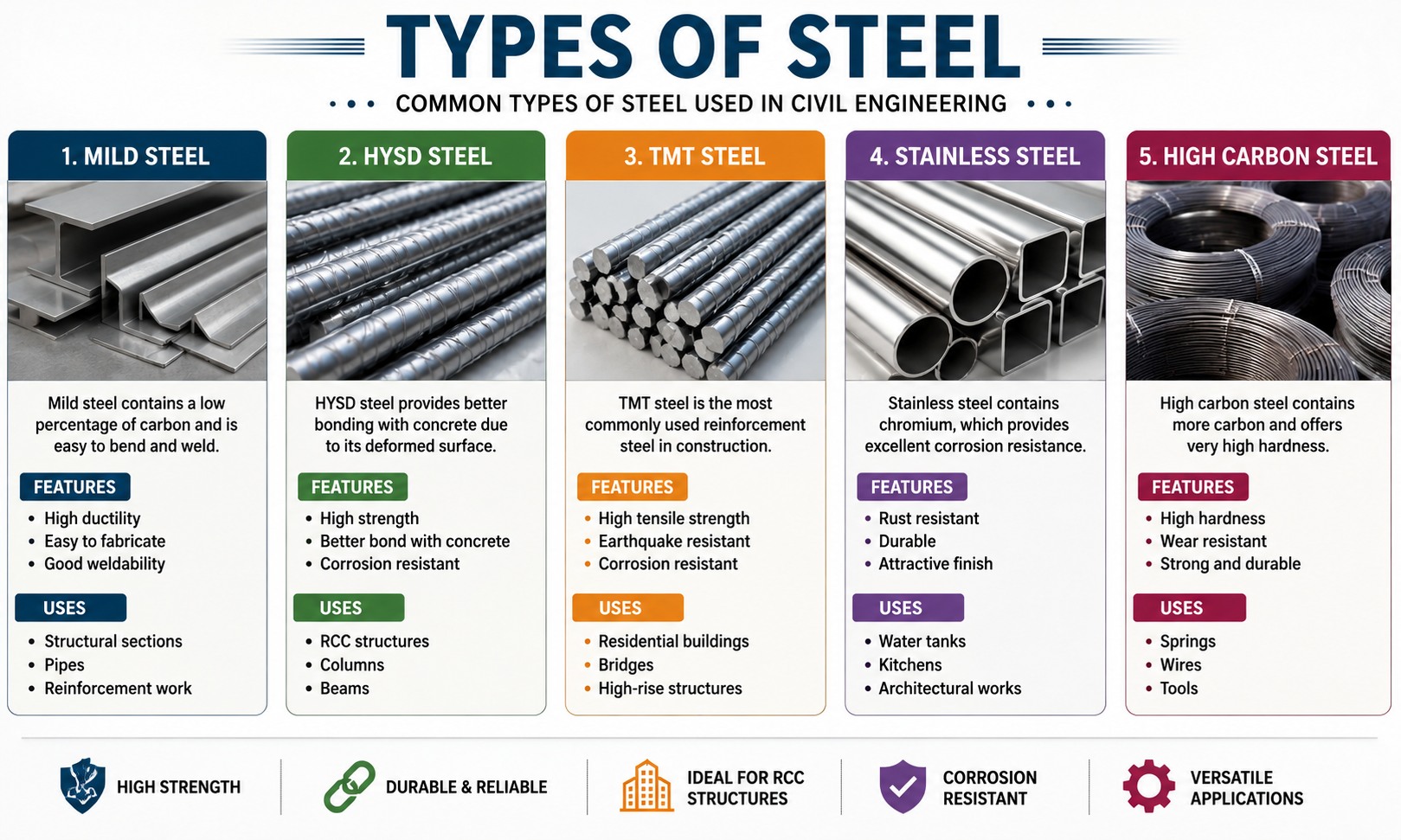
Mild steel contains a low percentage of carbon and is easy to bend and weld.
Features:
- High ductility
- Easy to fabricate
- Good weldability
Uses:
- Structural sections
- Pipes
- Reinforcement work
2. HYSD Steel
HYSD (High Yield Strength Deformed) steel provides better bonding with concrete due to its deformed surface.
Features:
- High strength
- Better bond with concrete
- Corrosion resistant
Uses:
- RCC structures
- Columns
- Beams
3. TMT Steel
TMT (Thermo Mechanically Treated) steel is the most commonly used reinforcement steel in construction.
Features:
- High tensile strength
- Earthquake resistant
- Corrosion resistant
Uses:
- Residential buildings
- Bridges
- High-rise structures
4. Stainless Steel
Stainless steel contains chromium, which provides excellent resistance against corrosion.
Features:
- Rust resistant
- Durable
- Attractive finish
Uses:
- Water tanks
- Kitchens
- Architectural works
5. High Carbon Steel
High carbon steel contains a higher percentage of carbon and offers greater hardness.
Features:
- High hardness
- Wear resistant
- Strong and durable
Uses:
- Springs
- Wires
- Tools
Properties of Steel
A good quality steel should possess the following properties:
- High tensile strength
- Ductility
- Durability
- Elasticity
- Toughness
- Weldability
- Corrosion resistance
Advantages of Steel
- High strength-to-weight ratio
- Long service life
- Easy fabrication and installation
- Recyclable material
- Excellent earthquake resistance
- Suitable for large-span structures
Uses of Steel in Construction
Steel is commonly used in:
- RCC structures
- Beams and columns
- Bridges
- Dams
- Railway tracks
- Industrial buildings
- Reinforcement bars
- Roofing structures
Common Grades of Steel
| Grade | Yield Strength |
|---|---|
| Fe250 | 250 MPa |
| Fe415 | 415 MPa |
| Fe500 | 500 MPa |
| Fe550 | 550 MPa |
| Fe600 | 600 MPa |
Difference Between Steel and Concrete
| Steel | Concrete |
|---|---|
| High tensile strength | High compressive strength |
| Flexible material | Rigid material |
| Ductile | Brittle |
| Used as reinforcement | Used as construction material |
| Lightweight compared to concrete | Heavier material |
Conclusion
Steel is one of the most essential construction materials in civil engineering. Due to its high strength, durability, and flexibility, it is extensively used in buildings, bridges, and other infrastructure projects.
Related Posts:
सिविल इंजीनियरिंग में स्टील क्या है?
स्टील लोहे और कार्बन से बनी एक मिश्रधातु (Alloy) है, जिसका उपयोग भवन, पुल, बीम, कॉलम तथा अन्य संरचनाओं में किया जाता है। इसकी उच्च तन्य शक्ति, टिकाऊपन और लचीलेपन के कारण यह आधुनिक निर्माण कार्यों में अत्यंत महत्वपूर्ण सामग्री है।
स्टील के प्रकार
1. Mild Steel
कम कार्बन वाली स्टील जिसे आसानी से मोड़ा और वेल्ड किया जा सकता है।
विशेषताएँ:
- अधिक नम्यता
- आसानी से निर्माण योग्य
- अच्छी वेल्डिंग क्षमता
उपयोग:
- संरचनात्मक कार्य
- पाइप
- सुदृढीकरण कार्य
2. HYSD Steel
विकृत सतह वाली उच्च शक्ति की स्टील जो कंक्रीट के साथ बेहतर बंधन प्रदान करती है।
विशेषताएँ:
- अधिक शक्ति
- बेहतर बंधन
- जंग प्रतिरोधी
उपयोग:
- RCC संरचनाएँ
- बीम
- कॉलम
3. TMT Steel
निर्माण कार्यों में सबसे अधिक उपयोग की जाने वाली स्टील।
विशेषताएँ:
- उच्च तन्य शक्ति
- भूकंप प्रतिरोधी
- जंग प्रतिरोधी
उपयोग:
- भवन निर्माण
- पुल
- बहुमंजिला इमारतें
4. Stainless Steel
क्रोमियम युक्त स्टील जो जंग से सुरक्षा प्रदान करती है।
विशेषताएँ:
- जंग प्रतिरोधी
- टिकाऊ
- आकर्षक फिनिश
उपयोग:
- पानी की टंकियाँ
- रसोई उपकरण
- सजावटी कार्य
5. High Carbon Steel
अधिक कार्बन वाली कठोर और मजबूत स्टील।
विशेषताएँ:
- अधिक कठोरता
- घिसाव प्रतिरोधी
- मजबूत
उपयोग:
- स्प्रिंग
- तार
- औजार
स्टील के गुण
एक अच्छी गुणवत्ता वाली स्टील में निम्न गुण होने चाहिए:
- उच्च तन्य शक्ति
- नम्यता
- टिकाऊपन
- लोच
- कठोरता
- वेल्डिंग क्षमता
- जंग प्रतिरोध
स्टील के लाभ
- अधिक शक्ति
- लंबी सेवा आयु
- आसानी से निर्माण योग्य
- पुनर्चक्रण योग्य
- भूकंप प्रतिरोधी
- बड़े स्पैन वाली संरचनाओं के लिए उपयुक्त
निर्माण कार्यों में स्टील के उपयोग
स्टील का उपयोग निम्न कार्यों में किया जाता है:
- RCC संरचनाएँ
- बीम और कॉलम
- पुल
- बाँध
- रेलवे ट्रैक
- औद्योगिक भवन
- सुदृढीकरण बार
- छत की संरचनाएँ
स्टील के सामान्य ग्रेड
| ग्रेड | यील्ड स्ट्रेंथ |
|---|---|
| Fe250 | 250 MPa |
| Fe415 | 415 MPa |
| Fe500 | 500 MPa |
| Fe550 | 550 MPa |
| Fe600 | 600 MPa |
स्टील और कंक्रीट में अंतर
| स्टील | कंक्रीट |
|---|---|
| उच्च तन्य शक्ति | उच्च संपीडन शक्ति |
| लचीला पदार्थ | कठोर पदार्थ |
| नम्य | भंगुर |
| सुदृढीकरण के लिए उपयोग | मुख्य निर्माण सामग्री |
| अपेक्षाकृत हल्का | अपेक्षाकृत भारी |
निष्कर्ष
स्टील सिविल इंजीनियरिंग की सबसे महत्वपूर्ण निर्माण सामग्रियों में से एक है। इसकी उच्च शक्ति, टिकाऊपन और लचीलेपन के कारण इसका उपयोग भवनों, पुलों तथा विभिन्न संरचनाओं में व्यापक रूप से किया जाता है।
संबंधित पोस्ट
© CiviGlobe. All Rights Reserved.
Empowering Civil Engineering Students Worldwide