Introduction
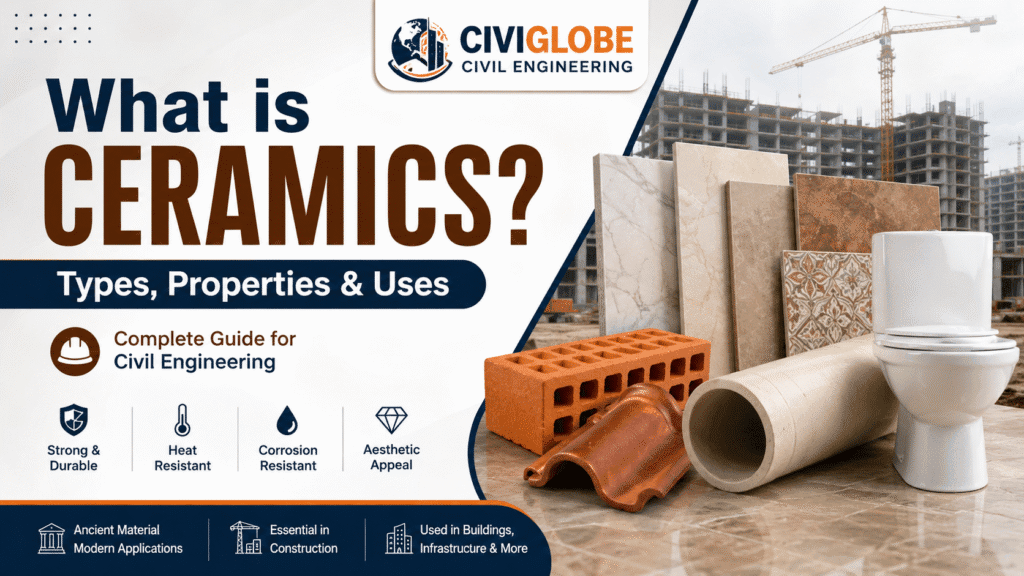
Ceramics are among the oldest and most widely used materials in construction and civil engineering. Due to their hardness, durability, heat resistance, and aesthetic appearance, ceramics are extensively used in tiles, sanitary ware, bricks, pipes, and decorative applications. Modern buildings rely on ceramic materials for both structural and finishing purposes.
What is Ceramics?
Ceramics are inorganic and non-metallic materials produced by heating natural materials such as clay, silica, and feldspar at high temperatures. They possess excellent strength, hardness, and resistance to heat and chemicals, making them suitable for various construction applications.
Types of Ceramics
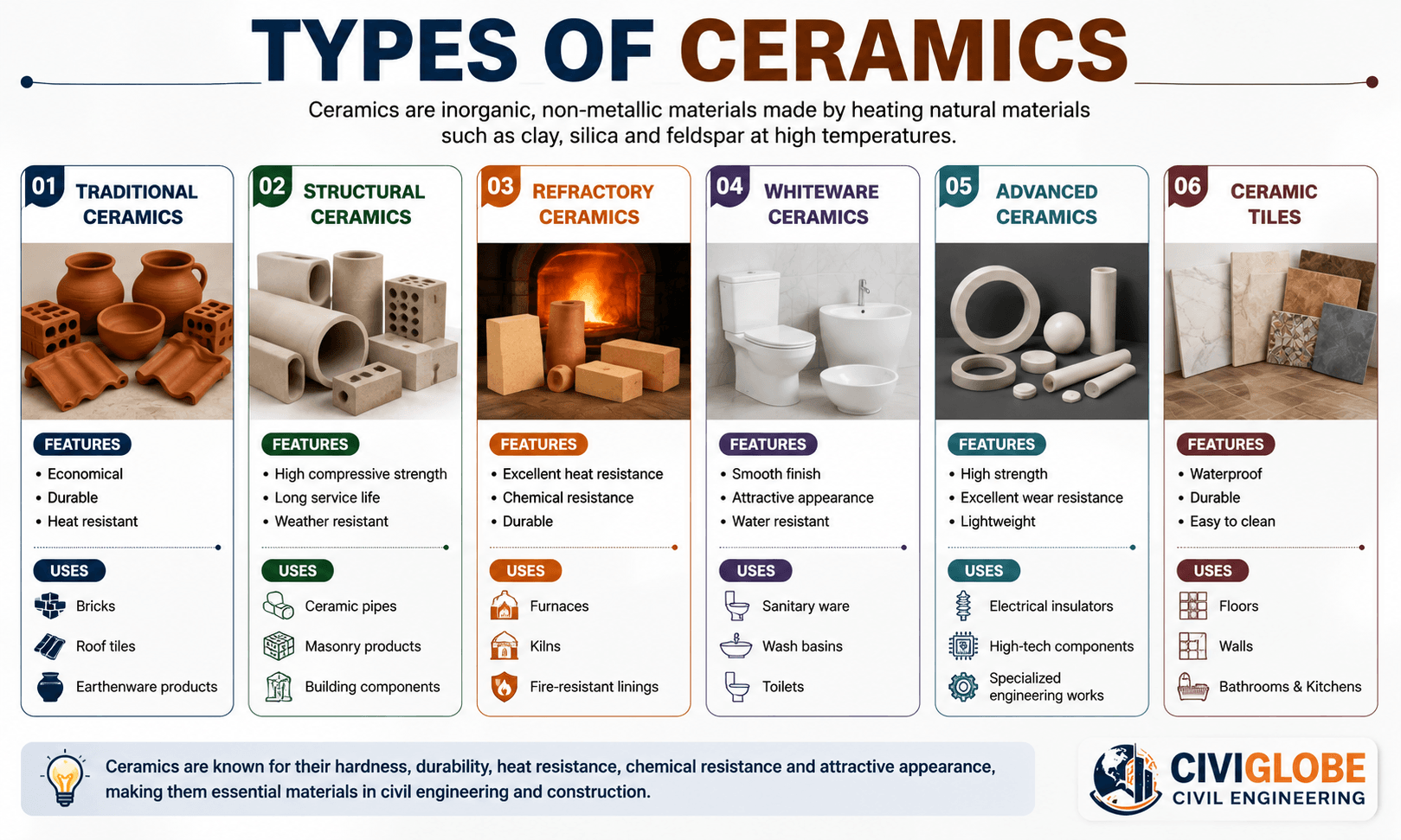
1. Traditional Ceramics
Traditional ceramics are manufactured mainly from clay and natural minerals.
Features
- Economical
- Durable
- Heat resistant
Uses
- Bricks
- Roof tiles
- Earthenware products
2. Structural Ceramics
Structural ceramics are designed for strength and durability in construction.
Features
- High compressive strength
- Long service life
- Weather resistant
Uses
- Ceramic pipes
- Masonry products
- Building components
3. Refractory Ceramics
Refractory ceramics can withstand extremely high temperatures.
Features
- Excellent heat resistance
- Chemical resistance
- Durable
Uses
- Furnaces
- Kilns
- Fire-resistant linings
4. Whiteware Ceramics
Whiteware ceramics are fine ceramic products having smooth surfaces and attractive appearance.
Features
- Smooth finish
- Attractive appearance
- Water resistant
Uses
- Sanitary ware
- Wash basins
- Toilets
5. Advanced Ceramics
Advanced ceramics are manufactured using high-purity materials for specialized applications.
Features
- High strength
- Excellent wear resistance
- Lightweight
Uses
- Electrical insulators
- High-tech components
- Specialized engineering works
6. Ceramic Tiles
Ceramic tiles are widely used finishing materials in buildings.
Features
- Waterproof
- Durable
- Easy to clean
Uses
- Floors
- Walls
- Bathrooms
- Kitchens
Properties of Ceramics
A good ceramic material should possess the following properties:
- High hardness
- Excellent durability
- Heat resistance
- Chemical resistance
- Low electrical conductivity
- Good compressive strength
- Attractive appearance
Advantages of Ceramics
- Durable and long-lasting
- Resistant to heat and chemicals
- Corrosion resistant
- Easy to clean
- Attractive appearance
- Low maintenance
Uses of Ceramics in Construction
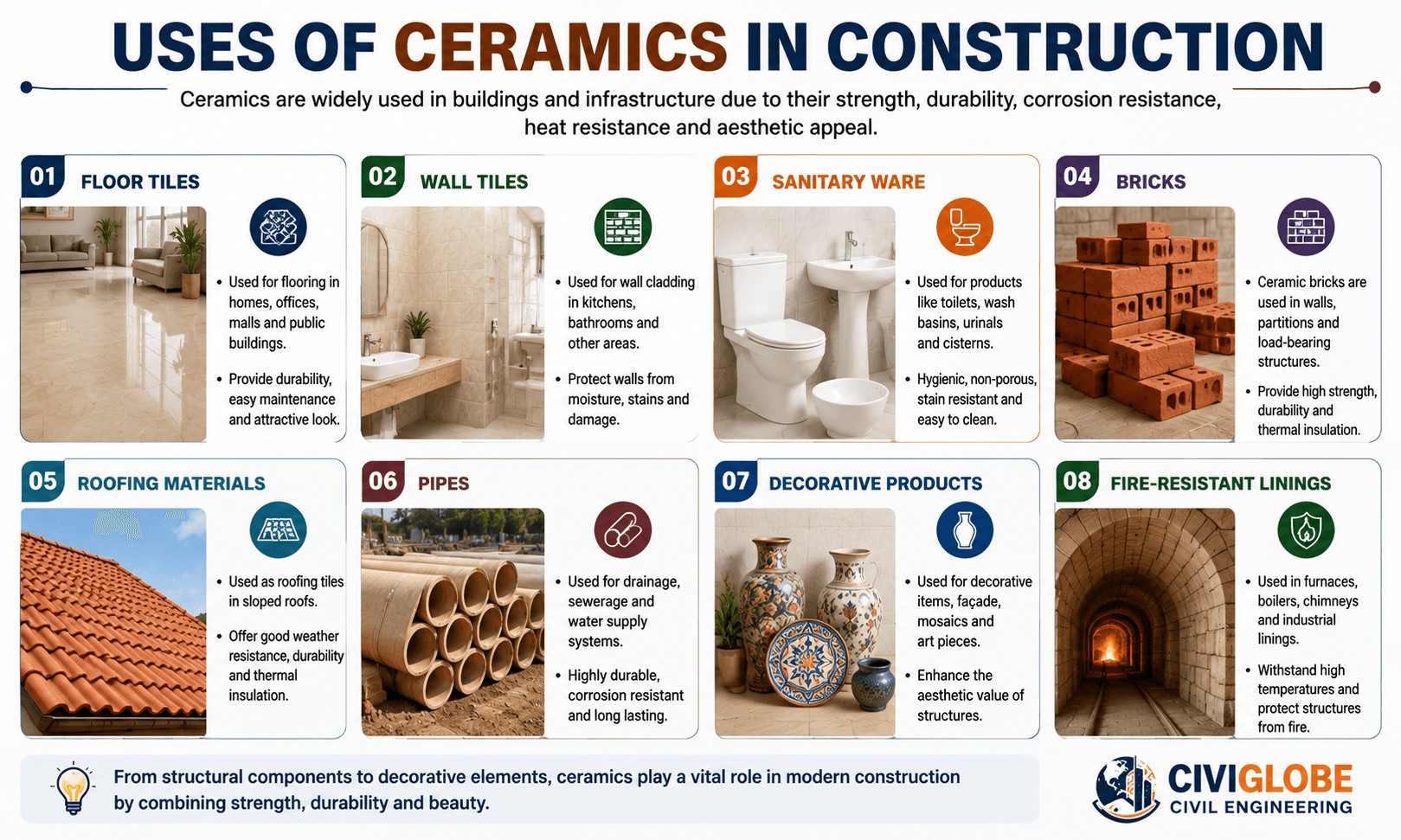
Ceramics are commonly used in:
- Floor tiles
- Wall tiles
- Sanitary ware
- Bricks
- Roofing materials
- Pipes
- Decorative products
- Fire-resistant linings
Difference Between Ceramics and Glass
| Ceramics | Glass |
|---|---|
| Opaque or partially transparent | Transparent |
| High compressive strength | Brittle |
| Excellent heat resistance | Moderate heat resistance |
| More wear resistant | Less wear resistant |
| Used in tiles and sanitary ware | Used in windows and facades |
Conclusion
Ceramics are important construction materials known for their hardness, durability, heat resistance, and aesthetic appearance. They are widely used in tiles, sanitary ware, pipes, and various building applications, making them essential materials in modern civil engineering.
Frequently Asked Questions (FAQ)
What are Ceramics?
Ceramics are inorganic and non-metallic materials made by heating clay and other natural materials at high temperatures.
What are the Types of Ceramics?
The main types of ceramics are Traditional Ceramics, Structural Ceramics, Refractory Ceramics, Whiteware Ceramics, Advanced Ceramics, and Ceramic Tiles.
What are the Uses of Ceramics?
Ceramics are used in floor tiles, wall tiles, sanitary ware, pipes, bricks, and fire-resistant applications.
Why are Ceramics Used in Construction?
Ceramics are durable, heat resistant, corrosion resistant, and require low maintenance.
सिरेमिक क्या है?
सिरेमिक एक अकार्बनिक (Inorganic) और अधात्विक पदार्थ है, जिसे मिट्टी, सिलिका और अन्य प्राकृतिक पदार्थों को उच्च तापमान पर गर्म करके बनाया जाता है। इसकी कठोरता, टिकाऊपन और ऊष्मा प्रतिरोध के कारण इसका उपयोग निर्माण कार्यों में व्यापक रूप से किया जाता है।
सिरेमिक के प्रकार
1. पारंपरिक सिरेमिक (Traditional Ceramics)
विशेषताएँ
- किफायती
- टिकाऊ
- ऊष्मा प्रतिरोधी
उपयोग
- ईंटें
- छत की टाइलें
- मिट्टी के बर्तन
2. संरचनात्मक सिरेमिक (Structural Ceramics)
विशेषताएँ
- उच्च संपीडन शक्ति ( High compressive strength )
- लंबी आयु
- मौसम प्रतिरोधी
उपयोग
- सिरेमिक पाइप
- भवन घटक
- चिनाई उत्पाद
3. अग्निरोधी सिरेमिक (Refractory Ceramics)
विशेषताएँ
- उच्च तापमान प्रतिरोधी
- रासायनिक प्रतिरोधी
- टिकाऊ
उपयोग
- भट्टियाँ
- फर्नेस
- अग्निरोधी लाइनिंग
4. व्हाइटवेयर सिरेमिक (Whiteware Ceramics)
विशेषताएँ
- चिकनी सतह
- आकर्षक स्वरूप
- जलरोधी
उपयोग
- वॉश बेसिन
- शौचालय
- सैनिटरी वेयर
5. उन्नत सिरेमिक (Advanced Ceramics)
विशेषताएँ
- उच्च मजबूती
- घिसाव प्रतिरोधी
- हल्का वजन
उपयोग
- विद्युत कुचालक
- विशेष इंजीनियरिंग कार्य
- उच्च तकनीकी उपकरण
6. सिरेमिक टाइलें (Ceramic Tiles)
विशेषताएँ
- जलरोधी
- टिकाऊ
- साफ करने में आसान
उपयोग
- फर्श
- दीवारें
- बाथरूम
- रसोई
सिरेमिक के गुण
- अधिक कठोरता
- टिकाऊपन
- ऊष्मा प्रतिरोध
- रासायनिक प्रतिरोध
- अच्छा संपीडन बल
- आकर्षक स्वरूप
सिरेमिक के लाभ
- लंबे समय तक टिकाऊ
- ऊष्मा और रसायनों के प्रति प्रतिरोधी
- जंग नहीं लगता
- कम रखरखाव
- साफ करने में आसान
निर्माण कार्यों में सिरेमिक के उपयोग
- फर्श की टाइलें
- दीवार की टाइलें
- सैनिटरी वेयर
- ईंटें
- छत सामग्री
- पाइप
- सजावटी उत्पाद
- अग्निरोधी लाइनिंग
सिरेमिक और ग्लास में अंतर
| सिरेमिक | ग्लास |
|---|---|
| अपारदर्शी या आंशिक पारदर्शी | पारदर्शी |
| अधिक संपीडन शक्ति | भंगुर |
| अधिक ऊष्मा प्रतिरोधी | मध्यम ऊष्मा प्रतिरोध |
| टाइल और सैनिटरी वेयर में उपयोग | खिड़कियों और फसाड में उपयोग |
निष्कर्ष
सिरेमिक एक महत्वपूर्ण निर्माण सामग्री है, जो अपनी कठोरता, टिकाऊपन, ऊष्मा प्रतिरोध और आकर्षक स्वरूप के कारण आधुनिक भवन निर्माण में व्यापक रूप से उपयोग की जाती है।
© CiviGlobe. All Rights Reserved.
Empowering Civil Engineering Students Worldwide