Introduction
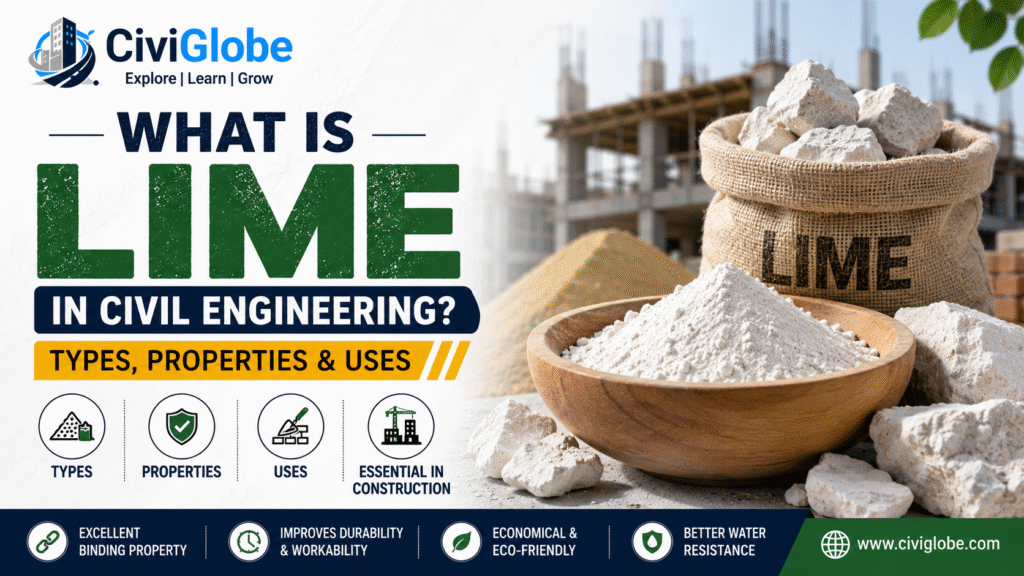
Lime is one of the oldest and most important construction materials used in civil engineering. It has been used for centuries in mortar, plastering, soil stabilization, and various construction works. Due to its binding properties and durability, lime still plays an important role in modern construction.
What is Lime?
Lime is a binding material obtained by heating limestone (calcium carbonate) in a kiln. It mainly consists of calcium oxide and is widely used in mortar, plaster, whitewashing, and soil stabilization works.
Types of Lime
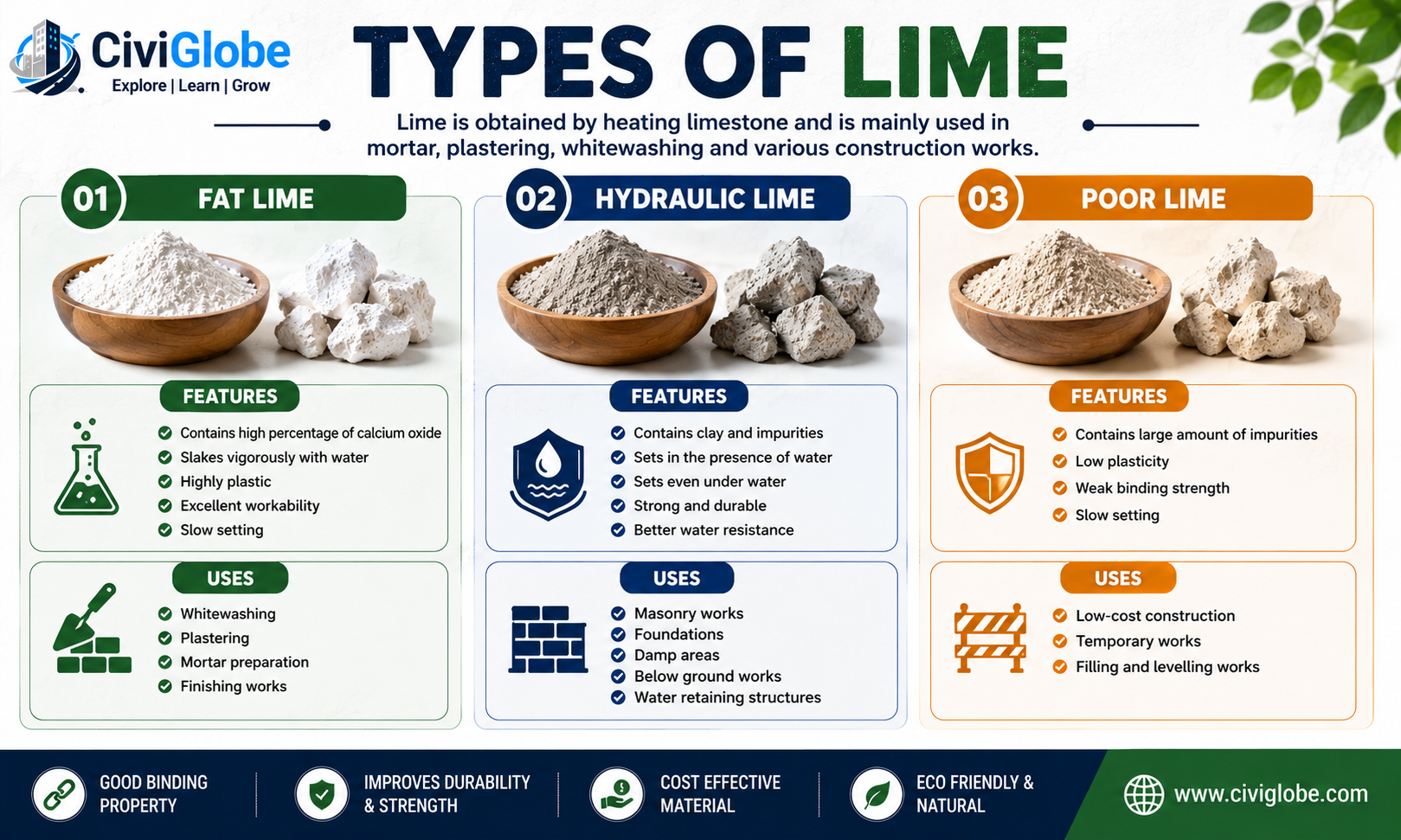
1. Fat Lime
Fat lime contains a high percentage of calcium oxide and slakes vigorously with water.
Features:
- Highly plastic
- Excellent workability
- Slow setting
Uses:
- Whitewashing
- Plastering
- Mortar preparation
2. Hydraulic Lime
Hydraulic lime contains clay and impurities, allowing it to set in the presence of water.
Features:
- Sets under water
- Strong and durable
- Better water resistance
Uses:
- Masonry works
- Foundations
- Damp areas
3. Poor Lime
Poor lime contains a large amount of impurities and possesses weak binding properties.
Features:
- Low plasticity
- Weak binding strength
- Slow setting
Uses:
- Low-cost construction
- Temporary works
Properties of Lime
A good quality lime should possess the following properties:
- Excellent binding property
- High plasticity
- Good workability
- Durable and strong
- Resistant to weathering
- Provides good adhesion
- Improves water resistance
Advantages of Lime
- Good workability
- Economical material
- Improves durability
- Environment friendly
- Provides excellent bonding
- Easy to handle and apply
Uses of Lime in Construction
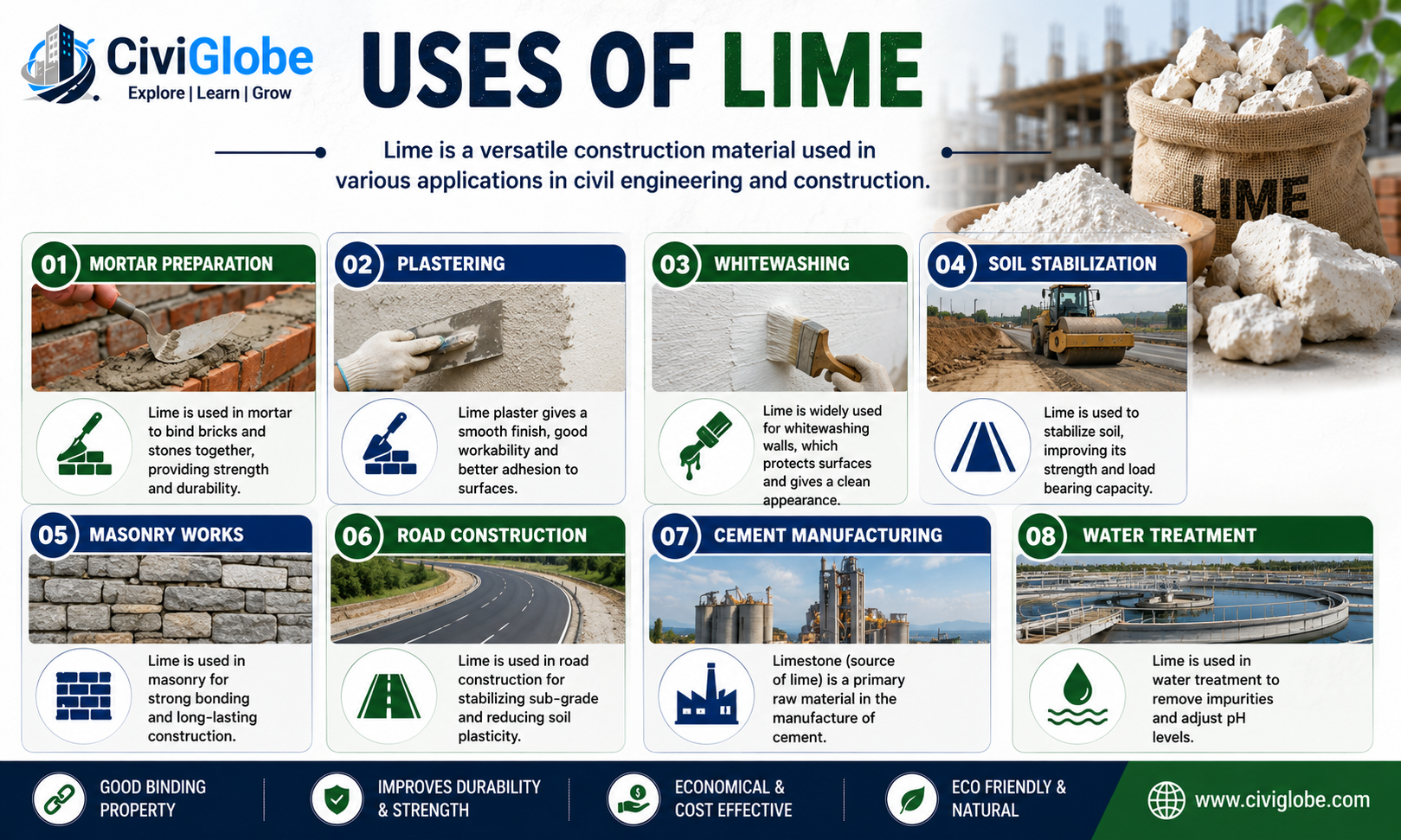
Lime is commonly used in:
- Mortar preparation
- Plastering works
- Whitewashing
- Soil stabilization
- Masonry construction
- Road construction
- Manufacturing of cement
- Water treatment
Difference Between Lime and Cement
| Lime | Cement |
|---|---|
| Obtained from limestone | Manufactured from limestone and clay |
| Slow setting | Fast setting |
| High plasticity | Lower plasticity |
| Better workability | Higher strength |
| Used in traditional construction | Widely used in modern construction |
Conclusion
Lime is an important construction material widely used in mortar, plastering, soil stabilization, and masonry works. Due to its excellent workability and binding properties, it continues to be an essential material in civil engineering.
Frequently Asked Questions (FAQ)
What is Lime?
Lime is a binding material obtained from limestone and used in mortar, plastering, and construction works.
What are the Types of Lime?
The main types of lime are Fat Lime, Hydraulic Lime, and Poor Lime.
What are the Uses of Lime?
Lime is used in mortar, plastering, whitewashing, soil stabilization, and cement manufacturing.
What is the Difference Between Lime and Cement?
Lime sets slowly and provides better workability, whereas cement sets quickly and provides higher strength.
चूना (Lime) क्या है?
चूना (Lime) एक महत्वपूर्ण निर्माण सामग्री है, जो चूना पत्थर (Limestone) को गर्म करके प्राप्त की जाती है। इसका उपयोग मोर्टार, प्लास्टरिंग, सफेदी, सड़क निर्माण तथा मिट्टी के स्थिरीकरण में किया जाता है।
चूने के प्रकार
1. फैट लाइम (Fat Lime)
विशेषताएँ:
- अधिक प्लास्टिसिटी
- अच्छी कार्यक्षमता
- धीरे-धीरे सेट होता है
उपयोग:
- सफेदी
- प्लास्टरिंग
- मोर्टार निर्माण
2. हाइड्रोलिक लाइम (Hydraulic Lime)
विशेषताएँ:
- पानी में भी सेट हो सकता है
- मजबूत और टिकाऊ
- बेहतर जलरोधक गुण
उपयोग:
- नींव
- चिनाई कार्य
- नम स्थानों में
3. पुअर लाइम (Poor Lime)
विशेषताएँ:
- कम प्लास्टिसिटी
- कमजोर बाइंडिंग गुण
- धीरे सेट होता है
उपयोग:
- अस्थायी निर्माण
- कम लागत वाले कार्य
चूने के गुण
- अच्छा बाइंडिंग गुण
- अधिक प्लास्टिसिटी
- अच्छी कार्यक्षमता
- टिकाऊ
- मौसम के प्रभावों के प्रति प्रतिरोधी
- अच्छी चिपकने की क्षमता
चूने के लाभ
- अच्छी कार्यक्षमता
- किफायती
- टिकाऊ
- पर्यावरण के अनुकूल
- अच्छी बाइंडिंग क्षमता
निर्माण कार्यों में चूने के उपयोग
- मोर्टार निर्माण
- प्लास्टरिंग
- सफेदी
- मिट्टी का स्थिरीकरण
- सड़क निर्माण
- सीमेंट निर्माण
- जल उपचार
चूना और सीमेंट में अंतर
| चूना | सीमेंट |
|---|---|
| धीरे सेट होता है | जल्दी सेट होता है |
| अच्छी कार्यक्षमता | अधिक मजबूती |
| अधिक प्लास्टिसिटी | कम प्लास्टिसिटी |
| पारंपरिक निर्माण में उपयोग | आधुनिक निर्माण में उपयोग |
निष्कर्ष
चूना एक महत्वपूर्ण निर्माण सामग्री है, जिसका उपयोग मोर्टार, प्लास्टरिंग, सफेदी तथा मिट्टी के स्थिरीकरण में किया जाता है। इसकी अच्छी कार्यक्षमता और बाइंडिंग क्षमता इसे सिविल इंजीनियरिंग में महत्वपूर्ण बनाती है।
© CiviGlobe. All Rights Reserved.
Empowering Civil Engineering Students Worldwide